How Does a Docking Station Work for a Laptop?
 By Theo LangUpdated
Through that single cable you can run external monitors, a wired network, USB devices and charging, so one plug sets up the whole desk. Check that your laptop's USB-C port supports video output before you buy.
What a docking station connects
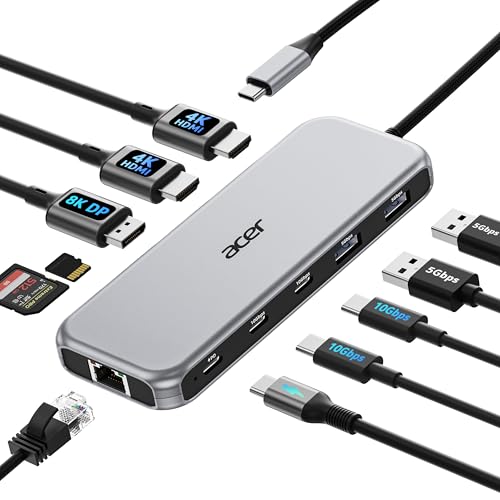
A dock adds video outputs such as HDMI or DisplayPort, USB-A and USB-C ports for a keyboard, mouse and drives, an Ethernet port for a wired network and often a card reader for camera cards. Many docks also pass power through to the laptop, so the same cable charges it while you work. Plug your monitors, network cable and USB devices into the dock once, then connect the laptop with one cable each time you sit down.
Check your laptop's port first
A USB-C port on a laptop does not always carry video. Look in your laptop's manual or spec sheet for DisplayPort Alt Mode, Thunderbolt or USB4 on that port. If the port only carries data, monitors attached to the dock stay blank even though the USB ports work. The Anker dock supports USB-C, USB4 and Thunderbolt connections, and it works with laptops that have DP Alt Mode and Power Delivery.
Count the monitors and their resolution
Count how many external monitors you want and which inputs they have. Then match them to the dock's video ports and the resolution the dock gives for one display and for two, since many docks lower the refresh rate when two monitors are attached. The Anker hub runs one display at 4K and 60 Hz, or two displays at 4K and 30 Hz, while the Acer dock runs two displays at 4K and 60 Hz.
Match the charging wattage
Compare the power delivery figure on the dock with the charger that came with your laptop. A dock that passes through less power than the laptop's own charger still charges it, but more slowly under load. The Anker hub passes through up to 85 W, the Dell WD25 delivers up to 100 W, the Acer dock delivers up to 90 W, and the Dell WD19S delivers up to 130 W. Some docks need a separate wall charger to pass power through, so check what comes in the box.
What you need

Anker Laptop Docking Station Dual Monitor
An 8-in-1 USB-C hub with two HDMI ports, Ethernet, SD and microSD card slots and up to 85 W pass-through charging.
View on Amazon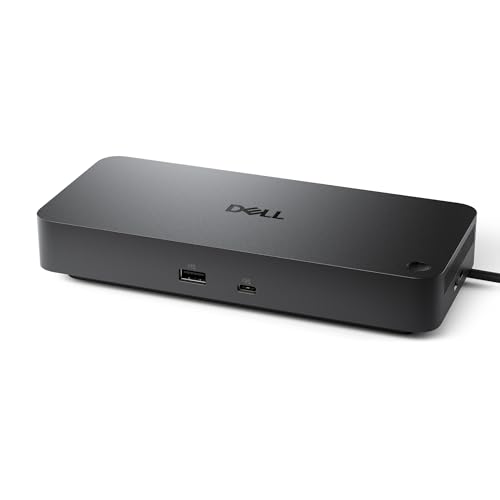
Dell Pro Laptop Docking Station WD25
A USB-C dock with HDMI, DisplayPort, Ethernet and 100 W power delivery, with support for up to four displays.
View on Amazon
Acer USB-C Docking Station Dual Monitor
A 9-in-1 USB-C dock with two HDMI ports at 4K and 60 Hz, USB-A and USB-C ports and up to 90 W power delivery.
View on Amazon
Dell WD19S 180W Docking Station (130W Power Delivery) USB-C
A USB-C dock with 130 W power delivery, HDMI and dual DisplayPort outputs.
View on AmazonThese come from our ranked list Best Docking Station, which compares them spec by spec.
FAQ
Is a docking station the same as a USB-C hub?
They do the same job of adding ports through one cable. A hub is a compact unit, while a dock is a larger desktop unit that can offer more ports, such as extra video outputs and Ethernet. Some docks need a separate wall charger to pass power through, so check what comes in the box.
Will a docking station work with a MacBook?
Some do, but macOS can mirror the same picture to both monitors on a USB-C dock instead of extending them. The Anker hub and the Acer dock both note this macOS limit, so check the dock's notes before you buy for two screens.
Do I need a docking station for one monitor?
No. A single cable from your laptop to the monitor is enough if the laptop has an HDMI port or a USB-C port with video output. A dock is worth it when you also want Ethernet, extra USB ports and charging through that one cable.