
Monitor Size & PPI Calculator
Enter a diagonal and resolution to get width, height, pixel density (PPI) and the distance where single pixels blend, then compare two monitors.
Screen A
Screen B
How the numbers are worked out
A screen's diagonal and its pixel grid fix everything else. With a resolution of W × H pixels and a diagonal of D inches, the diagonal holds √(W² + H²) pixels, so:
- Pixel density:
PPI = √(W² + H²) ÷ D - Physical width:
D × W ÷ √(W² + H²), and height the same way withH - Pixel pitch:
25.4 ÷ PPImillimetres - Blend distance:
1 ÷ (PPI × tan(1 arcminute))
The sizes are for the visible panel area. Makers round the diagonal they print on the box, and the stand and bezel add to the outer size, so check the listing's dimensions before measuring your desk.
Shopping for a screen? Our monitor guides compare current models by resolution, refresh rate and connections.
Questions
What is a good PPI for a desktop monitor?
There is no single cut-off. At a typical desk distance, many buyers notice text getting sharper as density rises from about 90 PPI (24-inch 1080p) to about 109 PPI (27-inch 1440p) and about 163 PPI (27-inch 4K). Use the blend distance in the calculator: if you sit farther away than that figure, extra density is hard to see.
Is a 27-inch monitor much bigger than a 24-inch one?
Both are usually 16:9, so the 27-inch screen has (27 ÷ 24)² ≈ 1.27 times the area, about 27% more. Enter both sizes above to see the exact width and height.
Why does a 34-inch ultrawide look smaller than a 32-inch 16:9 screen?
Diagonal size hides shape. A 34-inch 21:9 ultrawide is wider but shorter than a 32-inch 16:9 monitor, so its total area can be close to or below the 32-inch screen. Compare both above.
How is the pixel blend distance calculated?
It is the distance at which one pixel covers one arcminute of your view, the detail limit used to define 20/20 vision: distance = 1 ÷ (PPI × tan(1/60°)), about 3,438 ÷ PPI inches. Eyesight varies, so treat it as a guide rather than a hard limit.
Related buying guides
 8 picks
Best Computer Monitors (2026): Our 8 Picks Ranked
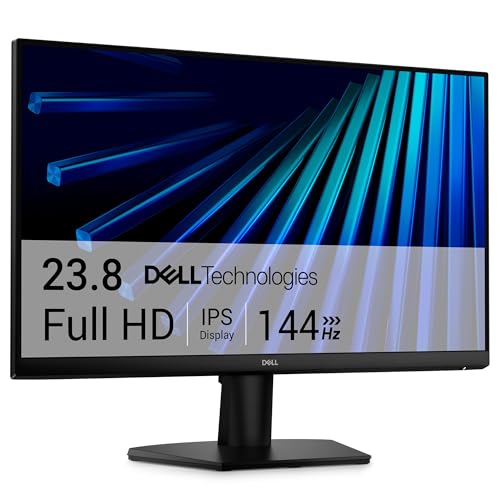
Top pick: Dell 24 Monitor SE2426H. 1920x1080, 144 Hz.
 8 picks
Best Gaming Monitor (2026): Top 8 by the Specs
Top pick: Dell 27 Gaming Monitor SE2726HG. 1920x1080, 240 Hz.
 8 picks
Best Portable Monitor (2026): 8 Models Side by Side
Top pick: ARZOPA 16.1'' Portable Gaming Monitor 106% sRGB Z1FC. 1080P FHD, 144 Hz.