
PSU Calculator
Add your CPU, graphics card and parts to estimate peak load and the power supply size that keeps it near 75% of the rating.
Your parts
| Part | Watts |
|---|---|
| Estimated peak load |
Maker figures checked on the NVIDIA, AMD and Intel product pages on November 9, 2026. Estimates only; the card maker's guidance and your PSU's own label take priority.
Compare power supplies →How the estimate works
The calculator adds up the peak draw of each part, then picks the smallest common PSU size that keeps that load at or below your target share of the rating:
- Processor: Intel's Maximum Turbo Power, or AMD's Default TDP where AMD gives no higher figure.
- Graphics card: NVIDIA Total Graphics Power, AMD Typical Board Power or Intel Total Board Power for the reference design.
- Other parts: the planning allowances shown, which you can edit.
- Size:
load ÷ target share, rounded up to 450, 550, 650, 750, 850, 1000, 1200, 1300, 1500 or 1600 W, and never below the graphics card maker's PSU figure.
Pick a unit with the connectors your card needs (a 12V-2x6 cable for most current NVIDIA cards) and enough PCIe cables for the rest of the build. Our power supply guides list wattage, modularity and connectors for current models.
Maker figures used
Graphics cards (29)
Processors (31)
Questions
How much headroom should a power supply have?
The calculator sizes the PSU so the estimated peak load sits at about 75% of its rating by default. That leaves margin for short power spikes from the graphics card and for adding parts later. You can change the target load share; a lower share picks a larger unit.
Why does the result sometimes jump to the GPU maker figure?
NVIDIA, AMD and Intel publish a minimum or recommended power supply for many cards. When that figure is higher than our estimate, the calculator uses the maker figure, because it already covers a typical full system around that card.
Why do AMD processors show TDP instead of peak power?
AMD product pages list a Default TDP but not the socket power limit (PPT) the chip can draw under full load, and that limit is higher than TDP. If you know the PPT for your processor or plan to raise power limits, choose Custom and type the higher figure.
Are factory-overclocked graphics cards covered?
The figures are for the reference or Founders Edition design. Partner cards with factory overclocks can draw more, and some partners recommend a larger PSU. Check the card listing and use Custom if it states a higher board power.
Related buying guides
 6 picks
Best Power Supply (2026): Our 6 Picks Ranked
Top pick: CORSAIR RM1000e ATX 3.1 PCIe 5.1 Ready 1000W Power Supply. Wattage: 1000 W.
 8 picks
Best GPU for Gaming (2026): 8 Picks Compared
Top pick: XFX Swift RX 9060. Video memory: 16 GB.
 8 picks
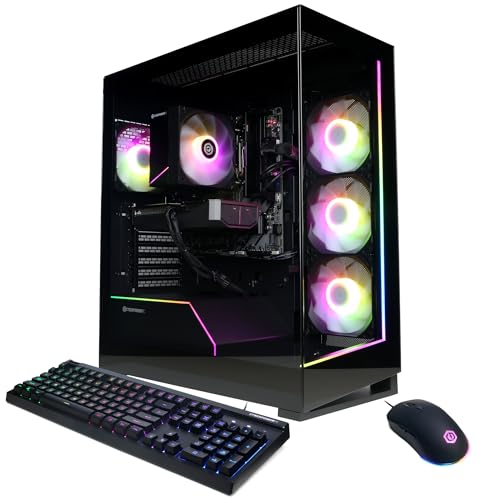
Best Gaming PC (2026): Top 8 by the Specs
Top pick: CyberPowerPC Gaming PC. 16GB RAM, 1TB SSD.