
Why Use a USB Hub With a Power Supply?
 By Theo LangUpdated
A USB hub with a power supply draws its own power from the wall instead of taking power from your laptop. That extra power lets the hub run hard drives, charge your laptop and keep several devices connected at once without draining the laptop battery. A powered hub suits a desk setup where many devices stay plugged in.
What the power supply does
A bus-powered hub takes power from the laptop port it plugs into, so the laptop shares its power with every device attached to the hub. A powered hub takes power from a wall outlet through its own adapter, so the laptop keeps its charge for its own work. The extra power also keeps drives and other devices running when the laptop port alone cannot supply enough. If your desk setup has several devices plugged in at once, a powered hub keeps them all running.
Match the charging power to your laptop
Compare the power delivery figure on the hub with the charger that came with your laptop. The Dell WD25 delivers 100 W, the Anker Nano delivers 100 W, the VVB dock outputs 87 W and the Selore dock outputs 85 W. A hub that delivers less power than the laptop charger still charges the laptop, but more slowly under load. Check the laptop manual for the power figure its own charger supplies before you pick a hub.
Check the laptop port and the box contents
A USB-C port on a laptop does not always carry video, so look in the laptop manual for DisplayPort Alt Mode, Thunderbolt or USB4 on that port. If the port only carries data, monitors attached to the hub stay blank even though the USB ports work. Also check what comes in the box: the Selore dock and the VVB dock ship without a charger or charging cable, so you need your own. The Anker Nano includes a 140 W power adapter.
Count the ports and displays you need
Count how many monitors you want and which inputs they have, then match them to the hub video ports. The Dell WD25 supports up to four displays, the Anker Nano supports up to three displays through two HDMI ports and one DisplayPort, and the Selore and VVB docks each support dual monitors through two HDMI ports. Count the USB devices, the card reader and the Ethernet port too, so the hub you pick covers the whole desk.
What you need
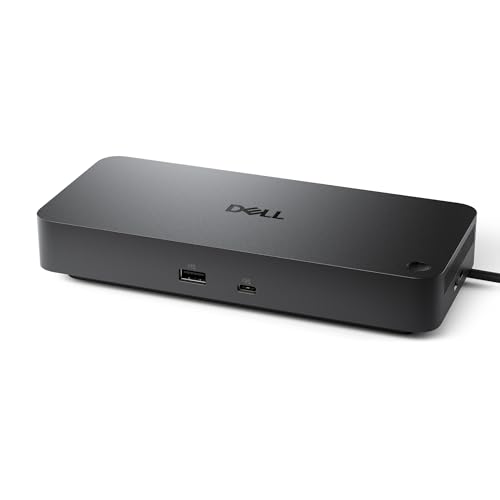
Dell Pro Laptop Docking Station WD25
A USB-C dock with 100 W power delivery, HDMI and DisplayPort, Ethernet and support for up to four displays.
View on Amazon
Selore USB C Docking Station Dual Monitor
An 8-in-1 USB-C dock with dual 4K HDMI ports, 85 W power delivery output, SD and microSD slots and USB 3.0 ports.
View on Amazon
Anker Nano Laptop Docking Station
A 13-in-1 dock with three-display support, 100 W power delivery and a 140 W power adapter included in the box.
View on Amazon
USB C Laptop Docking Station Dual Monitor
A 14-in-1 USB-C dock with dual 4K HDMI, DisplayPort, Ethernet and 87 W power delivery output.
View on AmazonThese come from our ranked list Best USB Docking Station, which compares them spec by spec.
FAQ
Does a powered USB hub charge the laptop?
It can, when the hub lists power delivery and you connect it with a USB-C cable that carries power. The Dell WD25 and the Anker Nano each deliver 100 W, while the VVB dock outputs 87 W and the Selore dock outputs 85 W. Check that your laptop charges over USB-C before you rely on the hub for charging.
What port do these powered hubs use to connect to a laptop?
These docks connect through USB-C. Check the ports on your laptop first, then pick a hub with a matching plug. A USB-C plug goes into a USB-C port on the laptop.
Why do my devices stop working when I plug in more of them?
A bus-powered hub shares the power from one laptop port across every device attached to it, so adding devices can leave too little power for each one. A powered hub takes power from a wall outlet, so the devices keep their supply. Move the power-hungry devices to the powered hub first.


