What Is a Portable SSD Used For?
 By Theo LangUpdated
A portable SSD is a small external drive that stores files outside your computer and moves them between devices over a USB cable. You use it to carry photos, videos and documents, to back up files, and to free space on a full drive. It plugs in, shows up as a drive, and works with laptops, phones and game consoles that have a matching port.
Carry files between devices
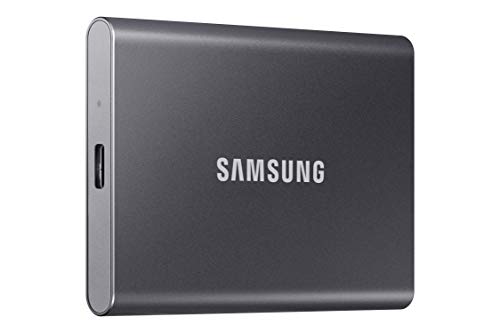
A portable SSD holds the files you need on the go and moves them from one device to another. Plug it into a laptop to copy photos and videos, then plug it into a phone or a tablet to open them there. The Transcend ESD310 has both USB-C and USB-A connectors, so it plugs into phones, tablets, MacBooks, Windows PCs and more without an adapter. The Samsung T9 works with a desktop, a camera or a gaming console, and it supports iPhone 15 Pro video.
Back up files and free space
When a laptop drive fills up, move large files to the portable SSD instead of deleting them. The SanDisk Extreme holds 2TB and the Samsung T9 holds 2TB, while the WD Elements holds 6TB for photos, videos, music and documents. The Transcend ESD310 holds 256GB and weighs 0.02 lb, with a tiny 2.81 by 0.79 by 0.31-inch form factor. Keep a copy of files that matter on the drive and a copy somewhere else, so one lost drive does not take everything with it.
Match the port and the speed
Check the port on your device before you buy, since a drive only runs at its rated speed on a matching port. The SanDisk Extreme and the Samsung T9 reach up to 2,000 MB/s, and the Transcend ESD310 reaches up to 1,050 MB/s read and 950 MB/s write. The SanDisk uses USB-C 3.2 Gen 2. The Samsung uses USB 3.2 Gen 2x2, and the WD Elements uses SuperSpeed USB 3.2 Gen 1 at 5Gbps. A USB-C port on a laptop does not always carry the same speed, so check the port in the laptop manual.
Keep the drive and its files protected
A portable drive travels with you, so its build and its password features matter. The SanDisk Extreme is IP65 rated for water and dust and has up to 3M drop protection, with 256-bit AES encryption and password protection for private files. The Transcend ESD310 has one-time password protection through Transcend Elite software, which sends a one-time password by email. The Samsung T9 works with Magician Software for firmware updates and extra encryption.
What you need

SanDisk 2TB Extreme Portable SSD
A 2TB portable SSD with up to 2,000 MB/s transfer speeds, USB-C 3.2 Gen 2, IP65 water and dust resistance and 256-bit AES encryption.
View on Amazon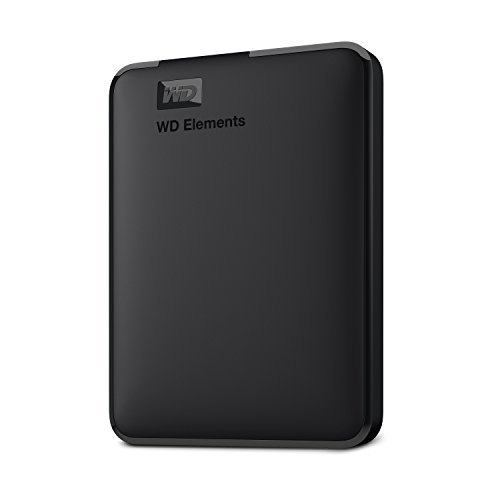
WD 6TB Elements Portable External Hard Drive
A 6TB portable hard drive with SuperSpeed USB 3.2 Gen 1, plug-and-play, for photos, videos, music and documents.
View on Amazon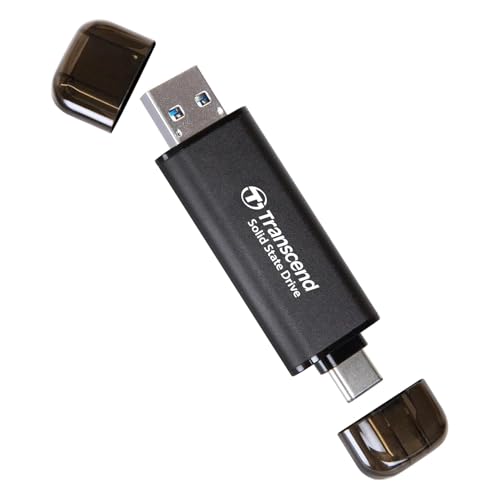
Transcend 256GB ESD310 Dual Portable SSD 1050MB/s
A 256GB thumb-drive SSD with up to 1,050 MB/s read speed, dual USB-C and USB-A ports, and one-time password protection.
View on Amazon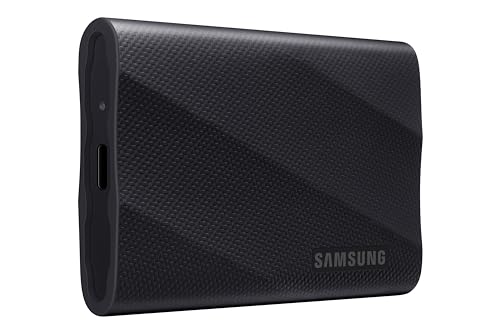
Samsung T9 Portable SSD
A 2TB portable SSD with up to 2,000 MB/s speeds, USB 3.2 Gen 2x2, and support for iPhone 15 Pro 4K video at 60fps.
View on AmazonThese come from our ranked list Best Portable External SSD, which compares them spec by spec.
FAQ
Is a portable SSD the same as a flash drive?
They work the same way, but a portable SSD holds more files and moves them faster. The Transcend ESD310 is a thumb-drive SSD with 256GB and up to 1,050 MB/s read speed, while the SanDisk Extreme and the Samsung T9 hold 2TB each. Pick the size that fits the files you carry.
Can I use a portable SSD with my phone?
Yes, when the phone has a matching port. The Transcend ESD310 works with iPhone, iPad and Android phones through its USB-C and USB-A ports, and it is pre-formatted as exFAT for plug-and-play. The Samsung T9 supports iPhone 15 Pro video. Check your phone's port first.
How do I pick the right size?
Compare the drive size with the files you keep. The Transcend ESD310 holds 256GB for a small set of files, the SanDisk Extreme and the Samsung T9 hold 2TB, and the WD Elements holds 6TB for large photo and video collections. A bigger drive holds more, so match it to what you store.