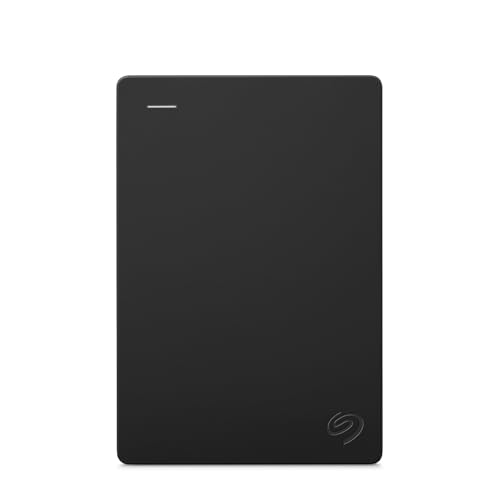
What Can an External Hard Drive Be Used For?
 By Theo LangUpdated
An external hard drive stores files outside your computer: backups, photos, videos, games and work files you move between devices. A portable SSD like the ones below plugs in over USB and carries the files with you, so the computer's own drive stays free for the system and apps.
Back up your files
An external hard drive holds a second copy of your files away from the computer. Copy photos, videos and documents to the drive, then keep the drive in a different place from the computer, so a lost or broken laptop does not take the only copy with it. All four drives here are portable SSDs that connect over USB, and the WD Elements SE adds plug-and-play use with no setup step. A backup only helps if it is current, so copy new files to the drive on a regular schedule you can keep.
Carry files between devices
A portable SSD moves files between a laptop, a desktop, a phone and a camera without a network. The Samsung T7 works with a PC or a mobile phone, and it uses USB 3.2 Gen 2. The WD Elements SE works with a PC or a Mac, and it uses USB 3.0. The Lexar ES3 works with iPhone 15 series phones, Android devices, laptops and cameras, and it uses USB 3.2 Gen 2. The SanDisk uses USB-C. Plug the drive in, copy the files, and unplug it before you move to the next device.
Record video and store games
Some portable SSDs record video straight from a camera or phone, so the footage lands on the drive instead of the device. The Samsung T7 records 4K video at 60fps directly, and supports iPhone 15 Pro Res 4K at 60fps video. Game data fits too: the T7 holds game data alongside working files, and the Lexar ES3 works with Xbox X|S, PS4 and PS5. Speeds differ by drive: the SanDisk runs up to 2000MB/s, the Samsung and Lexar run up to 1,050MB/s and 1050MB/s, and the WD runs up to 400MB/s.
Keep files private on the move
A drive that travels in a pocket or bag can be lost, so password protection and drop protection matter. The SanDisk Extreme carries 256-bit AES encryption with password protection, and the Lexar ES3 includes DataShield 256-bit AES encryption software. Drop protection runs up to 6 feet on the Samsung T7, up to 3M on the SanDisk and up to 2 meters on the WD Elements SE. The SanDisk also carries an IP65 rating for water and dust protection.
What you need

Samsung T7 Portable SSD
A 2TB portable SSD with USB 3.2 Gen 2 and read speeds up to 1,050MB/s for video, photos and backups.
View on Amazon
SanDisk 500GB Extreme Portable SSD
A 500GB portable SSD with up to 2000MB/s transfer speeds, IP65 protection and 256-bit AES encryption.
View on Amazon
WD 1TB Elements SE
A 1TB portable SSD with USB 3.0 and read speeds up to 400MB/s for everyday files and backups.
View on Amazon
Lexar ES3 512GB Portable SSD Silver
A 512GB portable SSD with USB 3.2 Gen 2 and read speeds up to 1050MB/s for phones, laptops and consoles.
View on AmazonThese come from our ranked list Best Portable SSD Hard Drive, which compares them spec by spec.
FAQ
Can I use an external hard drive for backups?
Yes. Copy photos, videos and documents to the drive and keep it separate from the computer, so a copy survives if the computer fails. The T7, SanDisk, WD and Lexar drives here all connect over USB for that job.
Can an external hard drive record video directly?
Yes, with a drive rated for it. The Samsung T7 records 4K video at 60fps directly from a camera or mobile device, and supports iPhone 15 Pro Res 4K at 60fps video.
Do external hard drives work with game consoles?
The Lexar ES3 works with Xbox X|S, PS4 and PS5, and the Samsung T7 stores game data. Check the requirements published for your console and game before you move files.