
Docking Station Types Explained
 By Theo LangUpdated
A docking station connects a laptop to monitors, a keyboard, a mouse, Ethernet and power through one cable. A small USB-C hub adds ports for travel, while a powered dock sits on a desk and charges the laptop. The right type depends on how many monitors you use and which ports your laptop has.
What a docking station does
A docking station turns one laptop port into a full desk setup. Plug the dock into your laptop, then plug your monitors, keyboard, mouse and other gear into the dock. One cable carries video, data and power, so you can connect and disconnect the laptop with a single plug. The docks below all connect over USB-C and add HDMI ports, and each one charges the laptop while it is connected.
Small USB-C hubs
A USB-C hub is a compact unit that plugs into the laptop and adds a few ports. The Anker hub is an 8-in-1 model with 2 HDMI ports, 2 USB-A ports, an Ethernet port, a card reader and 85W pass-through charging, and it weighs 0.2 lb. It runs one display at 4K at 60Hz or two displays at 4K at 30Hz. A hub suits a laptop bag and a desk that moves, since it plugs straight into the laptop and packs away with it.
Powered desktop docks
A powered dock is a larger desktop unit with more ports that runs on wall power, and the Acer dock needs a 100W+ power adapter that is not included. The Dell WD25 delivers up to 100W to the laptop and supports up to four displays, with HDMI, DisplayPort, Ethernet and USB-A and USB-C ports. The Dell WD19S delivers up to 130W, with HDMI and dual DisplayPort. The Acer dock is a 9-in-1 model with 2 HDMI ports and delivers up to 90W to the laptop. A powered dock suits a fixed desk where the laptop stays put.
How to choose the right type
Start with the laptop. Check that its USB-C port supports video output and Power Delivery, since a dock works with the video and power the port already provides. Then count what you connect: the number of monitors, plus Ethernet, a card reader or extra USB ports. Match the dock to that list: the Anker hub and the Acer dock each cover up to two monitors, while the Dell WD25 supports up to four displays. Check the warranty term before you buy: the Anker carries an 18-month warranty, the Acer 1 year and the Dell WD25 3 years.
What you need

Anker Laptop Docking Station Dual Monitor
A USB-C hub with 2 HDMI ports, Ethernet, 85W pass-through charging and an SD card reader, in an 8-in-1 design.
View on Amazon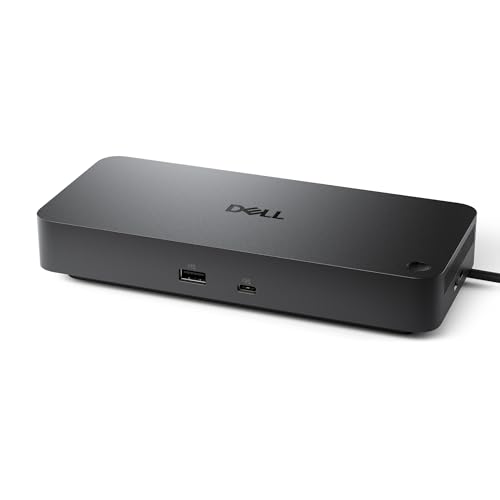
Dell Pro Laptop Docking Station WD25
A USB-C dock with up to 100W charging, HDMI and DisplayPort, Ethernet and support for up to four displays.
View on Amazon
Acer USB-C Docking Station Dual Monitor
A 9-in-1 USB-C dock with 2 HDMI ports, 90W charging to the laptop and SD and MicroSD slots.
View on Amazon
Dell WD19S 180W Docking Station (130W Power Delivery) USB-C
A USB-C dock with 130W power delivery, HDMI and dual DisplayPort ports.
View on AmazonThese come from our ranked list Best Docking Station, which compares them spec by spec.
FAQ
Can a docking station charge my laptop?
Yes, if the dock supports Power Delivery and your laptop charges over USB-C. The Anker delivers up to 85W, the Acer up to 90W, the Dell WD25 up to 100W and the WD19S up to 130W. Check that your laptop's USB-C port supports Power Delivery.
Will a USB-C dock work with my laptop?
It works when the laptop has a USB-C port with video output and Power Delivery. The Anker dock supports USB-C, USB4 and Thunderbolt connections, and Windows 10 and 11 and ChromeOS. Check the manual for your laptop before you buy.
How many monitors can a docking station run?
It depends on the dock. The Anker hub runs one display at 4K at 60Hz or two at 4K at 30Hz, and the Dell WD25 supports up to four displays. Check the number of video ports on the dock and what your laptop supports.


