What Makes a Chromebook Fast?
 By Theo LangUpdated
A Chromebook feels fast when Chrome OS, the processor, memory and storage work together without delay. Chrome OS is light, so it leaves more of the processor and memory for the browser and apps. A newer multi-core processor handles more tabs at once, more memory keeps those tabs open, and flash storage loads the system and files quickly. A fast Wi-Fi connection also matters for cloud apps and streaming.
The processor handles your tabs
The processor runs the browser, each open tab and each app. A processor with more cores can switch between those tasks with less waiting, so pages load and apps respond while other tabs stay open in the background. Check the processor name in the listing and compare it with the requirements published for the apps and games you plan to use.
Memory keeps tabs open
Memory holds the tabs and apps you have open right now. When memory fills up, the system has to reload tabs you return to, and that reload shows up as a pause. More memory lets you keep more tabs and apps open at once before that reloading starts. Close tabs you no longer use if pages start to reload when you switch back to them.
Storage affects loading times
Storage holds Chrome OS, your apps and your files, and it affects how quickly the Chromebook starts and how quickly apps and files open. Flash storage, such as eMMC, reads data faster than a spinning hard drive. More storage also gives you room for apps, downloads and offline files, so check how much space your apps and files take before you choose.
Chrome OS stays light
Chrome OS is built around the browser and cloud apps, so it asks less of the processor and memory than a full desktop system. It updates in the background and keeps its own files separate from your apps, which helps it start quickly. Keep Chrome OS updated and remove apps and extensions you no longer use, since each one adds work when the system starts.
Wi-Fi and the display shape speed
Most Chromebook work happens online, so the Wi-Fi connection shapes how fast pages, video and cloud files feel. Wi-Fi 6 and a strong signal help pages and streams load with less waiting. The display also matters: a higher resolution picture asks more of the graphics, so match the screen to the video and apps you use most.
What you need

Lenovo Flagship Chromebook
A 14-inch touchscreen Chromebook with a 1920 x 1080 display, an 8-core MediaTek Kompanio 520 processor, 4 GB of RAM, 64 GB of eMMC storage and Wi-Fi 6.
View on Amazon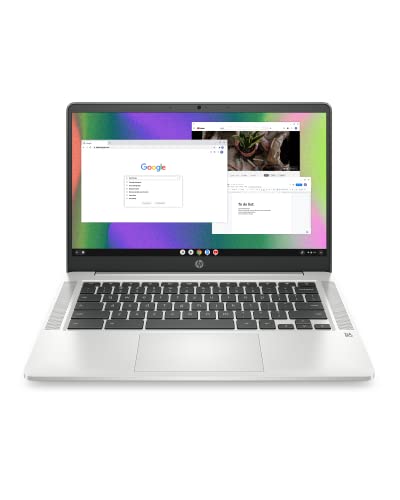
HP Chromebook 14 Laptop
A 14-inch Chromebook with an Intel Celeron N4120 processor, Intel UHD Graphics 600, 4 GB of RAM, 64 GB of eMMC storage and a 1366 x 768 display.
View on Amazon
Acer 15.6-inch Touch Chromebook
A 15.6-inch touchscreen Chromebook with an Intel Processor N50, 8 GB of DDR5 RAM, 128 GB of eMMC storage and a 1920 x 1080 display.
View on Amazon
HP Chromebook 15 15.6-inch Laptop
A 15.6-inch Chromebook with an Intel N200 processor, 8 GB of DDR5 RAM, 64 GB of eMMC storage and a numeric keyboard.
View on AmazonThese come from our ranked list Best Chromebook, which compares them spec by spec.
FAQ
Does more RAM make a Chromebook faster?
More memory helps when you keep many tabs and apps open, because it lets the system hold them without reloading. It does not change the speed of your Wi-Fi connection or the processor.
Why does my Chromebook slow down with many tabs open?
Each tab uses processor time and memory. When those fill up, tabs reload and pages take longer to respond. Close tabs you no longer use and remove extensions you do not use.
Does Wi-Fi change how fast a Chromebook feels?
Yes, for anything that loads from the web. A weak signal or a busy network makes pages, video and cloud files load slowly, even on a Chromebook that starts quickly.