
How to Build a Custom Water Loop PC
 By Theo LangUpdated
A custom water loop PC cools the CPU, and sometimes the GPU, with liquid that moves through a pump, a radiator, tubing and cold plates mounted on the parts. You plan the loop around your case, fit the cold plates, radiator, pump and reservoir, then fill it, check every fitting for leaks and bleed the air out before you switch the PC on.
Plan the loop around your case
Decide which parts the loop will cool, then check how much room your case has for a radiator, a reservoir and a pump. Measure the space where the radiator will sit and the path the tubing will take between the parts. List every part the loop needs, including the CPU cold plate, radiator, pump, reservoir, fittings, tubing and coolant, and check that the CPU cold plate fits your socket before you order anything.
Fit the cold plates and radiator first
Shut the PC down, unplug it, and follow the manual for each part you fit. Mount the CPU cold plate on the processor with the mounting hardware that came with it, and mount the radiator where the case gives it clear airflow. Fit the fans on the radiator so air moves through it, and leave the tubing runs open until every part sits where it belongs.
Route the tubing and connect the pump
Cut each tube to the length the run needs, with a little slack so the tube does not pull on a fitting. Push each tube fully onto its fitting and tighten the fitting by hand, then check that the pump sits low in the loop with its inlet fed from the reservoir. Keep the tubing clear of fans and sharp edges, and leave the fill port easy to reach.
Fill the loop and check for leaks
Fill the reservoir with coolant and run the pump with the PC powered off so the liquid moves through the loop, topping the reservoir up as the level drops. Watch every fitting, cold plate and radiator joint for drips while the pump runs, and keep paper towels under the joints so a small leak shows at once. If you see a leak, stop the pump, dry the area and reseat the fitting before you fill again.
Bleed the air out and finish
Tilt the case gently from side to side so trapped air moves toward the reservoir, then top the coolant up to the fill line and close the fill port. Run the pump until the flow sounds steady and no more bubbles reach the reservoir. Check the coolant level again after the first day of use, and tighten any fitting that shows a drip before you close the case.
What you need

ARCTIC Liquid Freezer III Pro 360 A-RGB
An AIO CPU cooler for LGA1851, LGA1700, AM4 and AM5 with an integrated VRM fan, offset mounting and a 6-year warranty.
View on Amazon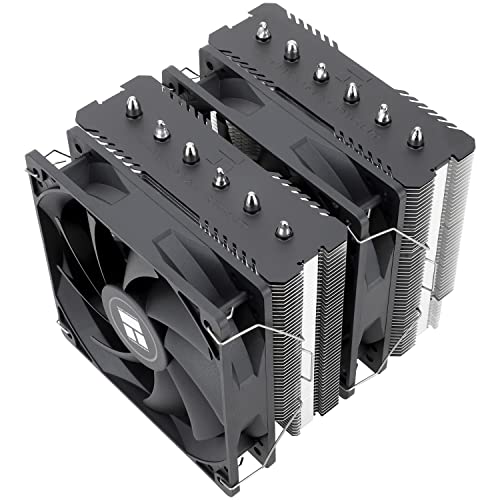
Thermalright Peerless Assassin 120 SE CPU Cooler
A dual-tower air CPU cooler with 6 heat pipes and two 120mm PWM fans for AMD AM4 and AM5 and Intel LGA 1700, 1150, 1151, 1200 and 1851.
View on Amazon
ARCTIC Liquid Freezer III Pro 360
An AIO CPU cooler with 3 fans for LGA1851, LGA1700, AM4 and AM5, with an integrated VRM fan and a 6-year warranty.
View on Amazon
LIAN LI HydroShift II Curved 360 TL Flex AIO Cooler-Black-HS2OLDC36TB
An AIO cooler with a motorized 6.67-inch 2K 60Hz curved OLED display and 3 fans for Intel LGA 1851 and 1700 and AMD AM5 and AM4.
View on AmazonThese come from our ranked list Best Cooler for PC, which compares them spec by spec.
FAQ
Do I need a custom loop to cool a CPU?
No. A closed-loop AIO cooler mounts on the CPU and moves liquid through a sealed radiator, so it needs no filling or leak checks. A custom loop suits a builder who wants to choose each part and cool more than the CPU.
How do I know if a radiator fits my case?
Check the case manual for the radiator sizes and fan mounts it lists, then compare them with the radiator and fan sizes the cooler lists. Measure the space where the radiator will sit, including room for the fans and the tubing runs.
What should I do if I find a leak?
Stop the pump at once, dry the parts around the leak and reseat the fitting. Refill the reservoir, run the pump again and watch the joint until it stays dry.
Can I mix an AIO cooler with a custom loop?
No. An AIO cooler is a sealed unit, so its pump, radiator and tubing stay together. A custom loop uses separate parts that you connect with fittings and tubing.


