
PC Cooler Types Explained
 By Theo LangUpdated
A PC cooler keeps the CPU within its working temperature by moving heat away from the chip. The main types are air coolers, which use a metal heatsink and fans, and AIO liquid coolers, which carry heat through liquid to a radiator with fans. The right choice depends on your CPU socket, the space inside your case and how much cooling your build calls for.
Air coolers: heatsink and fans
An air cooler mounts a metal heatsink on the CPU, and fans push air through its fins to carry heat away. Heat pipes move heat from the base of the cooler up into the fins, where the airflow removes it. Air coolers mount straight onto the motherboard, need no pump or tubes, and leave the space around the socket open for memory and case airflow. Check the height of the cooler against the space in your case before you buy.
AIO liquid coolers: pump and radiator
An AIO cooler uses a pump on the CPU to move liquid through tubes to a radiator, where fans push air through it to shed the heat. The radiator mounts to the case, so the weight sits on the case instead of the motherboard. Radiators come in sizes such as 360 mm, and your case must have mounting points and room for the size you pick. Check the tube length and the fan positions against your case layout before you buy.
Check the socket and the case
A cooler only fits if it lists your CPU socket. The coolers shown here list sockets such as LGA1851, LGA1700, AM4 and AM5, so match the list to your motherboard before you buy. Then check the case: an air cooler must clear the side panel and the memory slots, and a radiator must match a mounting spot with room for its fans. Shut the PC down and unplug it before you open the case, and follow the maker's manual.
Match the cooler to your build
Start from the socket and the space in your case, then look at what each cooler offers. A large air cooler needs headroom above the motherboard, while an AIO needs a radiator mount and room for its tubes. Look at the fan count and the cable routing, and pick the cooler that fits your case and your socket. Check the maker's notes for the mounting hardware in the box.
What you need

ARCTIC Liquid Freezer III Pro 360 A-RGB
An AIO cooler with a 360 mm radiator, A-RGB fans, a VRM fan and integrated cable management, listed for LGA1851, LGA1700, AM4 and AM5.
View on Amazon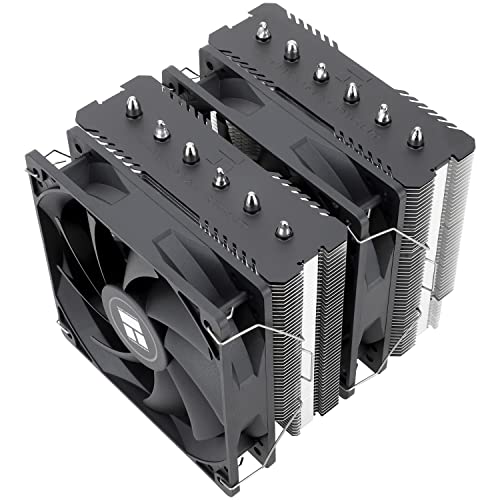
Thermalright Peerless Assassin 120 SE CPU Cooler
An air cooler with 6 heat pipes and dual 120 mm PWM fans, listed for AMD AM4 and AM5 and Intel LGA 1700, 1150, 1151, 1200 and 1851.
View on Amazon
ARCTIC Liquid Freezer III Pro 360
An AIO cooler with 3 fans, a VRM fan and integrated cable management, listed for LGA1851, LGA1700, AM4 and AM5.
View on Amazon
LIAN LI HydroShift II Curved 360 TL Flex AIO Cooler-Black-HS2OLDC36TB
An AIO cooler with a 360 mm radiator, 3 TL Flex fans and a curved OLED display, listed for Intel LGA 1851 and 1700 and AMD AM5 and AM4.
View on AmazonThese come from our ranked list Best Cooler for PC, which compares them spec by spec.
FAQ
Do I need a liquid cooler for my PC?
No. An air cooler suits many builds, and a liquid cooler suits builds where the case has room for a radiator and the CPU runs hot under load. Check the socket support and the case clearance before you choose.
Will any CPU cooler fit any motherboard?
No. Coolers list the sockets they fit, such as LGA1851, LGA1700, AM4 and AM5. Check your motherboard socket and the mounting hardware that comes with the cooler before you buy.
How do I know if a cooler fits my case?
Check the case manual for the tallest air cooler it takes and for the radiator sizes it mounts. Measure the space around the CPU socket and the memory slots, and confirm the fan and radiator clear them.


