What Are the Types of Graphics Cards?
 By Theo LangUpdated
Graphics cards come in a few main types: integrated graphics built into the processor, dedicated gaming cards with their own video memory, and workstation cards built for professional software. Dedicated cards plug into a PCIe slot and carry their own GDDR6 or GDDR7 memory, while integrated graphics share the computer's system memory. Small form factor and low profile cards fit smaller cases.
Integrated graphics
Integrated graphics live inside the processor and share the computer's system memory, so there is no separate card to buy or install. They handle everyday work such as browsing, documents and video playback. If your work or games slow down, check the requirements published for your software before you buy a dedicated card.
Dedicated gaming graphics cards
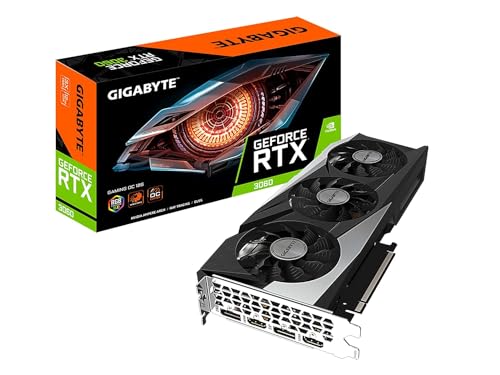
A dedicated gaming card is a separate card that plugs into a PCIe slot and carries its own video memory. The gaming cards here carry 6GB of GDDR6 memory or 8GB and 16GB of GDDR7 memory. The RTX 5060 Ti cards use the NVIDIA Blackwell architecture and DLSS 4, and the RTX 3050 uses the Ampere architecture. Check the requirements published for your game or software, and check that your case has room for the card and its slot width.
Workstation graphics cards
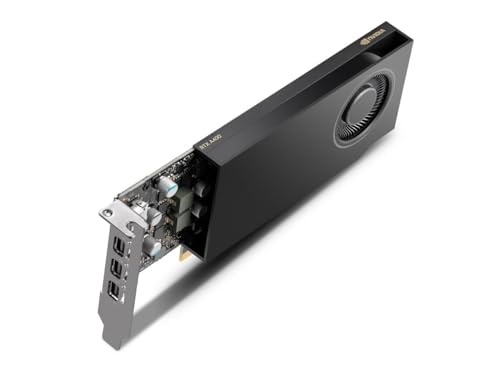
A workstation card is built for professional software rather than games. The NVIDIA RTX 4000 SFF Ada Generation is a dual slot low profile card for rendering, data science and simulation, and for work such as video content rendering, architectural design assessments and virtual prototypes of product design. It uses the Ada Lovelace architecture. Check the requirements published for your software before you choose a workstation card.
Small form factor and low profile cards
Some cards are made for small cases. The ASUS PRIME RTX 5060 Ti cards are SFF-Ready with a 2.5-slot design, and the MSI RTX 3050 and the NVIDIA RTX 4000 are low profile cards. Measure your case and count the slots beside the PCIe slot before you buy, and check that the card's outputs match your monitor.
Video memory and outputs
Video memory holds the textures and frames a card works with. The gaming cards here carry 6GB, 8GB or 16GB of GDDR6 or GDDR7 memory, so check the requirements published for your software or game. For outputs, the MSI RTX 3050 has DisplayPort and HDMI 2.1a ports, and both ASUS cards have HDMI and DP 2.1.
What you need

ASUS PRIME GeForce RTX 5060 Ti 16GB
A 16GB GDDR7 gaming graphics card with PCIe 5.0, HDMI and DP 2.1, a 2.5-slot design and a Dual BIOS switch for Quiet and Performance profiles.
View on Amazon
ASUS Prime GeForce RTX 5060 Ti 8GB
An 8GB GDDR7 gaming graphics card with PCIe 5.0, HDMI and DP 2.1, a 2.5-slot design and a Dual BIOS switch for Quiet and Performance profiles.
View on Amazon
MSI Gaming RTX 3050 LP 6G OC Graphics Card
A 6GB GDDR6 low profile gaming graphics card with a 96-bit memory interface, DisplayPort and HDMI 2.1a ports.
View on Amazon
NVIDIA RTX 4000 SFF Ada Generation Workstation Ada Lovelace Architecture Dual Slot Low Profile Professional Graphics Board 900-5G192-2571-000 VD8465
A dual slot low profile workstation graphics card with the Ada Lovelace architecture for rendering, data science and simulation.
View on AmazonThese come from our ranked list Best Sff GPU, which compares them spec by spec.
FAQ
What is the difference between integrated and dedicated graphics?
Integrated graphics live inside the processor and share system memory, while a dedicated card is a separate card with its own video memory. The gaming cards here carry 6GB, 8GB or 16GB of GDDR6 or GDDR7 memory.
Do I need a dedicated graphics card?
It depends on your software. Integrated graphics handle everyday work such as browsing, documents and video playback. Check the requirements published for your game or software, and check that your case has room for the card.
What does GDDR7 mean on a graphics card?
GDDR7 is the type of video memory on the card. Both ASUS RTX 5060 Ti cards here carry GDDR7 memory, in 8GB and 16GB sizes, while the MSI RTX 3050 carries 6GB of GDDR6 memory.