
How to Set Up Fans in a PC Case
 By Theo LangUpdated
Setting up fans in a PC case means placing intake fans where cool air enters and exhaust fans where warm air leaves, then connecting each fan to a header on the motherboard. Check your case manual for the mount positions and fan sizes it supports before you buy or move any fans.
Check your case's fan mounts
Open your case manual and count the fan mounts and the sizes they take. The Lian Li A3-mATX supports up to 10 x 120mm fans and a 360mm radiator, and it comes with no fans included. The Cooler Master NR200P V3 takes top-mounted 240/280mm radiators, and the Lian Li A4-H2OX5 supports 240mm AIO water cooling. Match the fans you buy to the mount sizes your case lists, and check the clearance against your graphics card and power supply before you order.
Plan intake and exhaust positions
Give the air a path through the case. Put intake fans at the front and bottom to draw air in, and exhaust fans at the rear and top to push air out, since warm air rises. Mesh panels help this path: the A3-mATX has steel mesh side and top panels, the A4-H2OX5 has mesh on the bottom, sides and top, and the NR200P V3 has a vented mesh side panel. Check your case manual for the fan positions it shows before you mount each fan.
Mount the fans and connect the cables
Shut the PC down and unplug it before you open the case, and follow the maker's manual for your case and motherboard. Screw each fan to its mount with the airflow arrow facing the direction you planned. Route the fan cables along the case edges and plug each one into a fan header on the motherboard. If a mount will hold a radiator instead, follow the radiator maker's steps for fitting the fans to the radiator first.
Set fan speeds and check the airflow
After you close the case and power the PC on, open the motherboard's fan settings in the BIOS or its software and confirm each fan spins and responds to its speed setting. Hold a hand near each vent to feel whether air moves in or out as planned. If a fan blows the wrong way, shut the PC down, unplug it, and turn that fan around on its mount. Keep the mesh panels clear of dust so the air path stays open.
What you need

Lian Li A3-mATX PC Case
A 26.3L mATX case with steel mesh side and top panels that supports a 360mm radiator and up to 10 x 120mm fans, with no fans included.
View on Amazon
Lian Li A4-H2OX5 Mini-ITX Case-SFX Layout-PCIe 5.0 Riser-Black-A4H2OX5
An 11-liter Mini-ITX case with mesh panels on the bottom, sides and top and support for 240mm AIO water cooling.
View on Amazon
Fractal Design Terra Jade
A 10.4L Mini ITX case with a slidable central wall that gives 30 mm of internal flexibility for build balance.
View on Amazon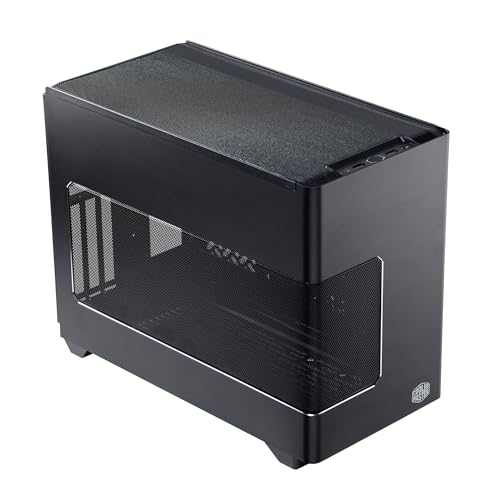
Cooler Master NR200P V3 Mini-ITX PC Case
An 18.6L Mini-ITX case with a vented mesh side panel and support for top-mounted 240/280mm radiators.
View on AmazonThese come from our ranked list Best ITX Case, which compares them spec by spec.
FAQ
Which way should case fans face?
Fans at the front and bottom draw air in, and fans at the rear and top push air out. Check the fan maker's manual for the airflow direction of each fan, and mount it so it blows the way you planned.
Do PC cases come with fans included?
The Lian Li A3-mATX comes with no fans included, so you add your own fans to its mounts, which take up to 10 x 120mm fans. Check the contents list in your case manual to see what your case includes.
Can I mount a radiator instead of fans?
Yes, where the case supports one. The Lian Li A3-mATX supports a 360mm radiator, the Lian Li A4-H2OX5 supports 240mm AIO water cooling, and the Cooler Master NR200P V3 takes top-mounted 240/280mm radiators. Follow the radiator maker's steps for fitting its fans.


