How to Install a Dedicated Graphics Card in a Laptop
 By Theo LangUpdated
Most laptops cannot take a dedicated graphics card inside the case, because the graphics chip is soldered to the main board. The workable route is an external GPU enclosure that connects to the laptop over Thunderbolt or USB4 and holds a desktop card. The steps below check your port, fit the card in the enclosure, and set up the drivers.
Check whether your laptop can take a card
Most laptops ship with the graphics chip soldered to the main board, so there is no slot inside for a desktop card. Check your laptop manual or spec sheet for a graphics upgrade path before you open anything. If the manual shows no way to swap the graphics, do not open the laptop to try. Shut the laptop down and unplug it first, and follow the maker's manual for any work inside the case. If the laptop is under warranty, contact the maker instead of opening it.
Check the port for an external enclosure
An external GPU enclosure holds a desktop card outside the laptop and links to it over a cable. The enclosure needs a Thunderbolt or USB4 port on the laptop, so check the manual or spec sheet for Thunderbolt or USB4 on your USB-C port. A USB-C port name alone is not proof that the port carries the link, so confirm it in the manual before you buy an enclosure. The ASUS cards in this guide use PCIe 5.0, so check that the enclosure takes a PCIe 5.0 card.
Fit the card in the enclosure
Open the enclosure as its manual shows, then set the card into the PCIe slot and press it down until it sits flat. Fasten the card bracket to the enclosure frame, then connect the power cables from the enclosure supply to the card. A 2.5-slot card needs room for two and a half slots, so check the space before you fasten anything. Close the enclosure, plug it into wall power, and connect it to the laptop.
Connect the enclosure and install drivers
Switch the laptop on with the enclosure connected and plugged in. Download the graphics driver from the card maker's site and install it, then restart the laptop when the installer asks. Open the display settings and check that the laptop lists the new card. If the card does not appear, check the cable, the port and the enclosure power, then check the driver install again.
What you need

ASUS PRIME GeForce RTX 5060 Ti 16GB
A 16GB GDDR7 card with PCIe 5.0, HDMI, a 2.5-slot design, Axial-tech fans and dual BIOS for a desktop or external enclosure build.
View on Amazon
ASUS Prime GeForce RTX 5060 Ti 8GB
An 8GB GDDR7 card with PCIe 5.0, HDMI, a 2.5-slot design, Axial-tech fans and dual BIOS for a desktop or external enclosure build.
View on Amazon
MSI Gaming RTX 3050 LP 6G OC Graphics Card
A 6GB GDDR6 low-profile card with HDMI 2.1a and DisplayPort 1.4a, a 1492 MHz boost clock and a 96-bit memory interface.
View on Amazon
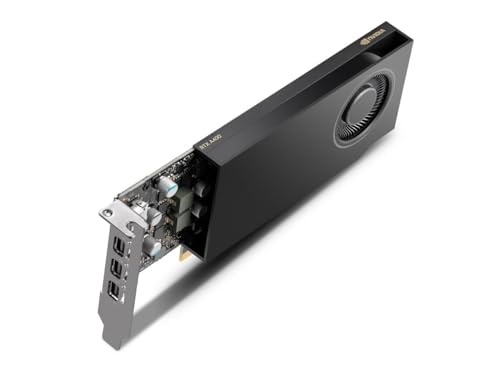
NVIDIA RTX 4000 SFF Ada Generation Workstation Ada Lovelace Architecture Dual Slot Low Profile Professional Graphics Board 900-5G192-2571-000 VD8465
A dual-slot low-profile workstation card built on the Ada Lovelace architecture.
View on AmazonThese come from our ranked list Best Sff GPU, which compares them spec by spec.
FAQ
Can I install a graphics card inside any laptop?
No. Most laptops have the graphics chip soldered to the main board, so there is no slot for a desktop card. An external GPU enclosure over Thunderbolt or USB4 is the route that takes a desktop card.
What port does an external GPU enclosure need?
A Thunderbolt or USB4 port on the laptop. Check the laptop manual or spec sheet for Thunderbolt or USB4 on that USB-C port, since a USB-C port does not always carry the link an enclosure needs.
Will any desktop graphics card fit an enclosure?
No. Check the enclosure manual for the slot size and card length it takes. The ASUS cards here are 2.5-slot designs, and the MSI card is a low-profile card, so match the card to the enclosure before you buy.