
How to Connect a Headset to a PC Without a Splitter
 By Theo LangUpdated
A PC with one 3.5mm combo jack takes a headset with one 3.5mm plug straight in, since that jack carries both headphone audio and microphone input. Headsets with a USB plug connect through a USB port instead, with no adapter needed.
Check the plug on your headset
Look at the end of your headset cable. A headset with one 3.5mm plug carries both the headphone audio and the microphone through that single plug, and it plugs straight into a combo jack. A headset with two separate 3.5mm plugs, one for headphones and one for the mic, needs two jacks or a USB connection instead. A headset with a USB plug connects through a USB port and needs no 3.5mm jack at all.
Plug into the combo jack
Find the 3.5mm jack on your PC or laptop. On a laptop it sits on the side, and on a desktop it sits on the front or back panel, next to a small headset symbol. Push the plug in until it sits fully in the jack. Your PC should pick up the headset right away, and you should hear sound through the earcups once you play audio.
Use a USB port instead
If your PC has separate headphone and mic jacks, a USB headset is the simple route: the BENGOO G9000 connects through USB, and the HyperX Cloud III connects through USB-C, USB-A or 3.5mm. Plug the USB connector into a free USB port on your PC. Your PC should pick up the headset as its own audio device, so you can use it without touching the 3.5mm jacks at all. A USB headset also keeps the headphone and microphone signals on one cable, so there is nothing to split.
Set the headset as the default device
Once the headset is plugged in, open the sound settings on your PC and set the headset as the output device for speakers and the input device for the microphone. If you hear nothing, check that the volume is up and that the right device is chosen for both output and input. If the input level stays still, check the mute controls: the HyperX Cloud III has an LED mic mute indicator, and the BENGOO G9000 has a key microphone mute on its cable.
Check the microphone is working
Speak into the microphone and watch the input level in your sound settings. The level bar should move as you speak, which shows the mic is picking up your voice. If the bar stays still, check that the headset is chosen as the input device and that the mic is not muted. Position the mic close to your mouth for the clearest pickup.
What you need

Razer BlackShark V2 X Gaming Headset
A wired headset with a 3.5mm jack, 50mm drivers, a cardioid mic and 7.1 surround sound on Windows 10 64-bit.
View on Amazon
Razer BlackShark V2 X Gaming Headset for PC
The white version of the same headset, with a 3.5mm jack, 50mm drivers, a bendable cardioid mic and memory foam cushions.
View on Amazon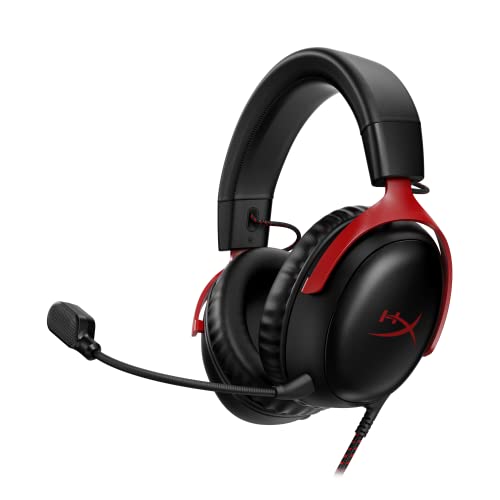
HyperX Cloud III Wired Gaming Headset for PC
A wired headset with USB-C, USB-A and 3.5mm connections, 53mm drivers, memory foam ear cushions and a 10mm mic with a mute indicator.
View on Amazon
BENGOO G9000 Stereo Gaming Headset for PS4 PC Xbox One PS5 Controller
A USB headset with 40mm drivers, an omnidirectional mic, LED lights on the earcups and a rotary volume control on the cable.
View on AmazonThese come from our ranked list Best PC Headset, which compares them spec by spec.
FAQ
Can I plug a headset into the mic jack?
No. The mic jack only takes microphone input, so plug a single-plug headset into the combo jack, or use a USB headset instead.
Why does my headset mic not work on my PC?
The headset may be plugged into a headphone-only jack, or the wrong input device may be chosen. Plug it into the combo jack or a USB port, then set it as the input device in your sound settings.
Do I need software for a USB headset?
No extra software is needed for the connection itself. Your PC picks up a USB headset as an audio device, though some headsets offer optional software for extra features such as surround sound.


