
How to Build Your Own Gaming PC
 By Theo LangUpdated
Building your own gaming PC means choosing the parts, fitting them into a case, and installing the operating system yourself. Start by picking a case that fits your motherboard size and graphics card length, then add the board, processor, memory, storage, power supply and cooling. Check the requirements published for each game or program you plan to run, and build on a clear table with the case manual open.
Pick a case that fits your parts
Start with the case, because it sets the limits for everything else. Check which motherboard size it takes, how long a graphics card it fits, and whether it takes the power supply size you plan to use. Measure your graphics card and cooler against the case manual before you buy, and leave room for cables and airflow.
Fit the motherboard and processor first
Shut the PC down and unplug it before you open the case, and follow the maker's manual for each part. Set the processor into the motherboard socket, lock it in place, and fit the memory sticks into their slots. Then mount the board on the case standoffs and fasten it with the screws from the case.
Install the graphics card and storage
Slot the graphics card into the motherboard and fasten its bracket to the case, then connect its power cables from the power supply. Fit each storage drive into its bay or slot and connect its data and power cables. Check that every cable clicks into place and that no cable sits in front of a fan.
Connect power and check your work
Connect the power supply cables to the motherboard, graphics card and drives, and connect the case front panel cables as the case manual shows. Tidy the cables so air can move through the case. Before you close the panels, look over every connection once more and confirm each part sits firmly in its slot.
Install the operating system and drivers
Connect a monitor, keyboard and mouse, then switch the PC on and enter the setup screen to check that the parts are detected. Install the operating system from your install media, then install the drivers from each part maker's site. Check the requirements published for each game or program before you install it.
What you need

Lian Li A3-mATX PC Case
A compact 26.3L mATX case that fits GPUs up to 415mm and a 360mm radiator, with steel mesh panels and front or side PSU mounting.
View on Amazon
Lian Li A4-H2OX5 Mini-ITX Case-SFX Layout-PCIe 5.0 Riser-Black-A4H2OX5
An 11-liter Mini-ITX case with a sandwich layout for a triple-slot GPU, a 240mm AIO and a PCIe 5.0 riser cable.
View on Amazon
Fractal Design Terra Jade
A 10.4L Mini-ITX case with a solid walnut front panel, room for a GPU up to 322mm and a front USB-C port.
View on Amazon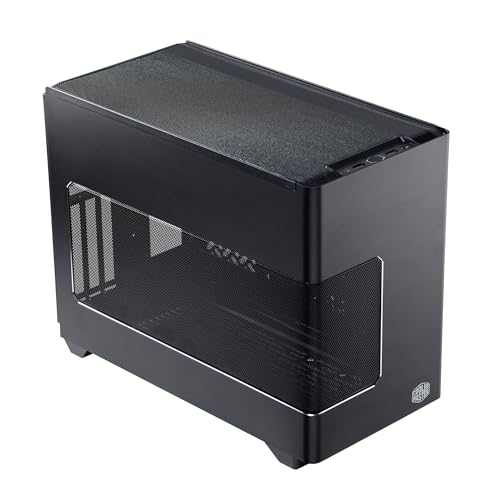
Cooler Master NR200P V3 Mini-ITX PC Case
An 18.6L Mini-ITX case with vertical GPU mounting for cards up to 361.5mm, a 280mm radiator and a PCIe 5.0 riser.
View on AmazonThese come from our ranked list Best ITX Case, which compares them spec by spec.
FAQ
Do I need a new case for a gaming PC?
No. You can reuse a case if your motherboard, graphics card and power supply fit inside it and the airflow suits the parts. Check the case manual for the sizes it takes before you buy parts.
What parts do I need to build a gaming PC?
You need a case, motherboard, processor, memory, storage, a graphics card, a power supply and cooling. Check the requirements published for each game or program you plan to run, and pick parts that match them.
How do I know if my parts fit together?
Match the motherboard size to the case, the graphics card length to the case clearance, and the power supply size to the case mount. Check each part maker's manual and spec sheet before you buy.


