
How to Build a Portable PC
 By Theo LangUpdated
A portable PC is a desktop built in a small case that you can carry between rooms or to another desk. Start with the case, since it sets the limits for the motherboard, graphics card, cooler and power supply. Check each part against the limits the case states before you buy, then set the parts up outside the case and confirm they start before you install them.
Pick the case first
The case sets the size of the whole build, so choose it before the other parts. Read the motherboard size it takes, such as Mini-ITX or mATX, and the limits it states for graphics card length, radiator size and power supply type. A smaller case fits fewer and shorter parts, so write down each limit and use it as your checklist when you pick the motherboard, graphics card, cooler and power supply.
Match the motherboard and power supply
A small case takes a Mini-ITX or mATX motherboard, so check the motherboard size the case states and buy a board in that size. Many small cases use an SFX or SFX-L power supply instead of a full-size ATX one, so check the power supply type and length the case states. Confirm the board and the power supply fit the case before you order the rest of the parts.
Check the graphics card and cooling
Measure the graphics card against the length the case states, and check how many slots the card takes against the expansion slots in the case. For cooling, check the radiator size the case states and whether it uses mesh panels or fan mounts for airflow. Keep the vents clear and leave room for air to move past the graphics card and the power supply.
Assemble and check before you close it
Install the processor, memory and storage on the motherboard first, then set the board on a flat surface, connect the power supply and check that the machine starts. Shut the machine down and unplug it before you open the case or move parts inside, and follow the maker manual for each part. If a part is under warranty, contact the maker instead of opening it.
Plan cables and the move
Small cases leave little room for cables, so route the power and data cables before you fix the parts in place and keep them away from fans. Use the shortest cables that reach, and tie the slack flat against the case so air can move. When you carry the PC, hold the case itself and set it down gently so the parts inside do not shift.
What you need

Lian Li A3-mATX PC Case
A 26.3-liter mATX case with steel mesh panels, room for a 415 mm graphics card and a 360 mm radiator, and ATX, SFX or SFX-L power supply support.
View on Amazon
Lian Li A4-H2OX5 Mini-ITX Case-SFX Layout-PCIe 5.0 Riser-Black-A4H2OX5
An 11-liter Mini-ITX case with a sandwich layout, a triple-slot graphics card mount, a 240 mm radiator mount and a PCIe 5.0 riser cable.
View on Amazon
Fractal Design Terra Jade
A 10.4-liter Mini-ITX case with a walnut front panel, room for a 322 mm graphics card, a PCIe 4.0 riser cable and a USB Type-C port.
View on Amazon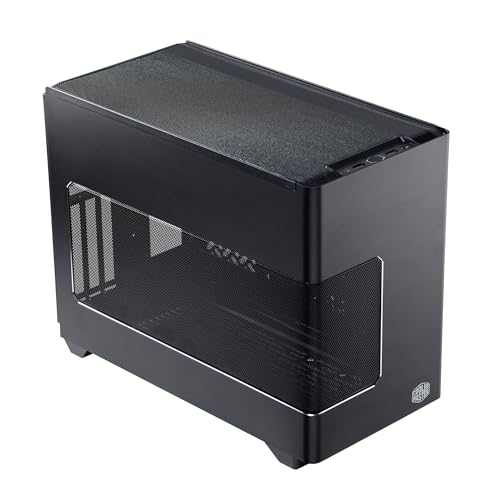
Cooler Master NR200P V3 Mini-ITX PC Case
An 18.6-liter Mini-ITX case with a vertical graphics card mount, room for a 361.5 mm card, 240 or 280 mm radiators and an SFX power supply.
View on AmazonThese come from our ranked list Best ITX Case, which compares them spec by spec.
FAQ
Can I use a full-size graphics card in a portable PC?
It depends on the case. Check the graphics card length the case states and compare it with the stated length of the card, and check the slots the card takes against the case. If the card is longer than the stated limit, pick a shorter card or a larger case.
Do I need a special power supply for a small case?
Many small cases take an SFX or SFX-L power supply rather than a full-size ATX one. Check the power supply type and length the case states, then check the wattage on the power supply against the guidance published for your graphics card and processor.
How do I keep a small PC cool?
Pick a case with mesh panels and fan mounts, and match the cooler or radiator to the space the case states. Keep the vents clear of dust and clutter, and leave room around the case so air can move through it.


