
Best Display Glasses for Men (2026): 4 Models Side by Side
 By Theo LangUpdated
The TOZO VIZO Z1 Pro AR Glasses 160"OLED 1800nit 120Hz suit men who want a large portable display for movies and gaming, with a 160-inch-equivalent Micro-OLED screen at Full HD per eye and a 120Hz refresh rate. Its 0-600 degree adjustable diopter and USB-C plug-and-play connection fit compatible phones, tablets, and laptops. The RayNeo GT and the two XREAL One Pro configurations below cover different screen sizes, tracking, and sound options.
Your shortlist at a glance
PCKitHQ scores range from 9.2 to 9.8. See how we pick.
| Product and key specifications | Score and retailer |
|---|---|
01 | 9.8PCKitHQ scoreView on Amazon |
02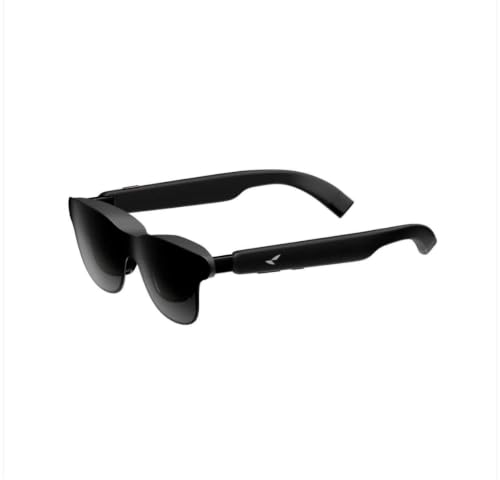 | 9.6PCKitHQ scoreView on Amazon |
03 | 9.4PCKitHQ scoreView on Amazon |
04 | 9.2PCKitHQ scoreView on Amazon |
A closer look at each configuration
TOZO VIZO Z1 Pro AR Glasses 160-inchOLED 1800nit
score
The 160-inch-equivalent Micro-OLED screen, 120Hz refresh rate, and adjustable diopter define this TOZO configuration.
- Native refresh rate
- 120 Hz
- Resolution
- Full HD
This TOZO configuration shows a 160-inch-equivalent screen through Micro-OLED panels with Full HD resolution per eye, 98 percent DCI-P3 color, and up to 200,000 to 1 contrast. Its refresh rate is 120Hz, and multi-level in-eye brightness control adjusts viewing across indoor and daytime conditions. The 0-600 degree adjustable diopter suits viewers who need vision correction built into the glasses. Connection is USB-C DisplayPort for compatible smartphones, tablets, and laptops, with no additional apps required for compatible devices. Dual stereo speakers and a detachable frame complete the configuration, which also supports 2D and 3D viewing.
Choose it if
- You want a 160-inch-equivalent screen for movies and gaming
- You need 0-600 degree diopter adjustment for clear viewing
Consider another if
- You need the 201-inch virtual screen of the RayNeo GT
- You need the 57 degree field of view of the XREAL One Pro
RayNeo GT AR Glasses
score
The 201-inch 3DoF virtual screen, up to 1200 nits perceived brightness, and 68g frame define the RayNeo GT.
- Native refresh rate
- 120 Hz
- USB-C
- Yes
- Weight
- 0.15 lb
- Warranty
- 1 Year Manufacturer
The RayNeo GT creates a 201-inch virtual screen with native 3DoF tracking, so the screen stays spatially positioned as you move, with Steady, Pinned, and Follow modes. Its MicroOLED panel reaches up to 1200 nits perceived brightness, with 145 percent sRGB, 98 percent DCI-P3, 200,000 to 1 contrast, up to 49 PPD, and a 120Hz refresh rate. Sound comes from a Bang and Olufsen tuned quad-speaker system with Zone 360 spatial audio, and the glasses support native 3D playback and real-time 2D-to-3D conversion. The frame weighs 68g, and 3840Hz hybrid dimming is designed to reduce visible flicker. It connects by USB-C DisplayPort to compatible iPhone 15 and later, Android devices, iPad, Mac, PC, Nintendo Switch, PS5, and Steam Deck, and carries a 1 Year Manufacturer warranty.
Choose it if
- You want a 201-inch 3DoF screen that stays positioned as you move
- You want Bang and Olufsen quad-speaker sound while you watch
Consider another if
- You need the 160-inch-equivalent screen of the TOZO
- You need the 57 degree field of view of the XREAL One Pro
XREAL One Pro AR Glasses
score
The 171-inch screen, 57 degree field of view, and X1 chip with native 3DoF define this XREAL One Pro.
- Native refresh rate
- 120 Hz
- Resolution
- FHD
- USB-C
- Yes
- Warranty
- 1 Year Warranty
This XREAL One Pro uses the self-developed X1 spatial computing chip for native 3DoF tracking with 3ms M2P latency, keeping visuals stable during rapid movement. X-Prism optics project a 171-inch screen with a 57 degree field of view, using a Sony 0.55-inch Micro-OLED display at FHD resolution and a 120Hz refresh rate. Real 3D turns games, movies, apps, and photos into 3D with a single switch. The M size fits IPD of 57 to 66mm, with three-stage adjustable arms and zero-pressure nose pads in three sizes. It connects by USB-C to devices capable of video output, including iPhone 16 and 15, Android phones with DP output, Steam Deck, ROG Ally, MacBook, and Windows PCs. The optional XREAL Eye adds 6DoF spatial anchoring. It carries a 1 Year Warranty.
Choose it if
- You want a 171-inch screen with a 57 degree field of view
- You want native 3DoF tracking with 3ms M2P latency
Consider another if
- You need the 201-inch virtual screen of the RayNeo GT
- You need up to 700 nits brightness from the Bose-tuned XREAL One Pro
XREAL One Pro AR Glasses
score
The 171-inch screen, Bose-tuned sound, and up to 700 nits brightness define this XREAL One Pro.
- Native refresh rate
- 120 Hz
- Resolution
- FHD
- USB-C
- Yes
- Weight
- 0.19 lb
- Warranty
- 1 Year Warranty
This XREAL One Pro shares the X1 chip, native 3DoF tracking with 3ms M2P latency, X-Prism optics, 171-inch screen, 57 degree field of view, and 120Hz FHD Sony Micro-OLED display of the other XREAL One Pro configuration. Its differences are sound and brightness: a sound chamber tuned by Bose engineers delivers audio without extra headphones, and brightness reaches up to 700 nits. The M size fits IPD of 57 to 66mm. It weighs 0.19 lb, connects by USB-C to devices capable of video output, and carries a 1 Year Warranty.
Choose it if
- You want Bose-tuned sound without extra headphones
- You want up to 700 nits brightness for bright rooms
Consider another if
- You need the 201-inch virtual screen of the RayNeo GT
- You need the 68g frame weight of the RayNeo GT
Make the choice for your setup
Compare screen size and field of view
The TOZO VIZO Z1 Pro shows a 160-inch-equivalent screen, the RayNeo GT shows a 201-inch virtual screen, and both XREAL One Pro configurations show a 171-inch screen. Only the XREAL One Pro configurations state a 57 degree field of view, which describes how much of your view the virtual screen fills. Screen size alone does not describe sharpness: the TOZO has Full HD per eye, the RayNeo GT reaches up to 49 PPD, and the XREAL One Pro has FHD resolution on a Sony 0.55-inch Micro-OLED display. Compare these stated figures against the viewing distance and screen size you want.
Compare tracking and 3D viewing
The RayNeo GT and both XREAL One Pro configurations have native 3DoF tracking. The RayNeo GT's screen stays spatially positioned as you move, while the XREAL One Pro's 3DoF keeps the screen at a constant distance relative to head movements. The RayNeo GT adds Steady, Pinned, and Follow modes, while the XREAL One Pro adds 3ms M2P latency through its X1 chip and an optional XREAL Eye for 6DoF spatial anchoring. The TOZO VIZO Z1 Pro supports 2D and 3D viewing. Both XREAL One Pro configurations offer Real 3D conversion with a single switch, and the RayNeo GT offers native 3D playback with real-time 2D-to-3D conversion. Choose tracking and 3D features that match how you watch. If that fits your setup better, see our guide to the Best Ar Glasses to Use As A Monitor.
Compare sound and connections
All four configurations connect by USB-C, with the TOZO and RayNeo GT using USB-C DisplayPort. The TOZO needs no additional apps for compatible devices, while the RayNeo GT notes that some devices may require an adapter. Sound differs: the TOZO has dual stereo speakers, the RayNeo GT has a Bang and Olufsen tuned quad-speaker system with Zone 360 spatial audio, and the Bose-tuned XREAL One Pro has a sound chamber tuned by Bose engineers. The RayNeo GT connects to iPhone 15 and later, Android devices, iPad, Mac, PC, Nintendo Switch, PS5, and Steam Deck. Check the device compatibility for each pair of glasses before buying.
For a wider shortlist, start with Best Video Glasses.
FAQ: Display Glasses for Men
What virtual screen sizes do these glasses show?
The RayNeo GT shows a 201-inch virtual screen with a 120Hz refresh rate and native 3DoF tracking. The two XREAL One Pro configurations show a 171-inch screen, and the TOZO VIZO Z1 Pro shows a 160-inch-equivalent screen at Full HD per eye.
Which glasses support native 3DoF tracking?
The RayNeo GT and both XREAL One Pro configurations have native 3DoF tracking. The TOZO VIZO Z1 Pro supports 2D and 3D viewing. The XREAL One Pro adds an optional XREAL Eye for 6DoF spatial anchoring.
What connections do these glasses use?
All four configurations connect by USB-C, with the TOZO and RayNeo GT using USB-C DisplayPort. The TOZO needs no additional apps for compatible devices, and the RayNeo GT notes that some devices may require an adapter. Check each pair's compatibility against the devices you own.


