What Is a Server Processor?
 By Theo LangUpdated
A server processor is the central processor in a server, a computer that answers requests from many other computers at once. It runs many tasks in parallel, works with large amounts of memory, and keeps running for long stretches. Desktop processors share the same basic job but serve a desktop and its user, while a server processor serves many users at once.
What a server processor does
A server processor is the central processor inside a server, a computer that answers requests from many other computers. It runs services such as websites, shared files, databases and mail for many users at the same time. To do that it handles many tasks in parallel and keeps running for long stretches without a break. The job is the same as in a desktop, but the load comes from many people instead of a desk user.
Cores, threads and clock speed
A core is a processing unit inside the processor, and a thread is a stream of work a core can handle. More cores and threads let a server split work across many tasks at once, which suits services with many users. Clock speed, given in GHz, sets how fast each core runs. The Ryzen 9 9950X3D lists 16 cores and a max boost clock up to 5.7 GHz, while the Ryzen 7 5700X lists 8 cores and 16 threads with a 4.6 GHz max boost. Compare core counts and clock figures together, since clock speed alone does not describe the whole processor.
Memory, cache and platform
A server processor works with large amounts of memory, and server memory can correct errors so a faulty bit does not corrupt data. Cache is fast memory on the processor itself that holds data the cores need next. The Ryzen 9 9900X lists 76 MB cache with DDR5-5600 support, while the Ryzen 7 5800X3D lists 100 MB cache with DDR4-3200 support. The socket and board set the memory type: the Ryzen 7 chips here use Socket AM4, and the Ryzen 9 chips use Socket AM5. Check the board manual for the memory and socket the processor needs.
Server processor or desktop processor
The processors shown here are desktop processors, built for a desktop and its user. A server processor is built for a rack or a server case, many users at once, and long runs without a break. Desktop and server processors share cores, threads, cache and sockets, but the platform around them differs: server boards add memory capacity, remote management and storage for many drives. When choosing, match the processor to the board, the socket and the memory the workload needs, and check the maker's manual for the cooling and power the build needs.
What you need

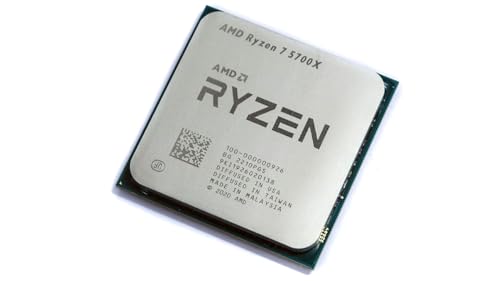
AMD Ryzen 7 5700X 8-Core
An 8-core, 16-thread desktop processor with 4.6 GHz max boost, 36 MB cache and DDR4-3200 support on Socket AM4.
View on Amazon
AMD Ryzen 7 5800X3D 8-core
An 8-core, 16-thread desktop processor with AMD 3D V-Cache, 4.5 GHz max boost and 100 MB cache on Socket AM4.
View on Amazon
AMD Ryzen 9 9950X3D 16-Core Processor
A 16-core desktop processor with a max boost clock up to 5.7 GHz, a 4.3 GHz base clock and Zen 5 architecture on Socket AM5.
View on Amazon
AMD Ryzen 9 9900X 12-Core
A 12-core, 24-thread unlocked desktop processor with 5.6 GHz max boost, 76 MB cache and DDR5-5600 support on Socket AM5.
View on AmazonThese come from our ranked list Best CPU for Computer, which compares them spec by spec.
FAQ
Can I use a desktop processor in a server?
A desktop processor fits a desktop board, and a server needs a board and platform built for server use. Check the socket, the memory support and the board before choosing parts for a server.
How many cores does a server processor have?
It varies by model. The processors shown here list 8, 12 and 16 cores. Match the core count to the number of tasks the server runs at once.
Do server processors need a cooler?
Yes, a processor needs cooling. Some of the processors shown here list cooler not included, so check what cooling the board and case support before buying.
What socket does a server processor use?
It depends on the platform. The processors shown here use Socket AM4 or Socket AM5, and server boards use server sockets. Match the processor to the socket on the board.