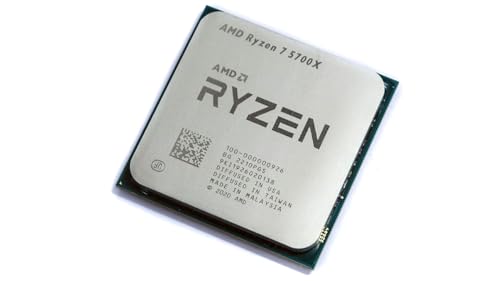
What Does a CPU Processor Do?
 By Theo LangUpdated
A CPU, or central processing unit, is the part of a computer that carries out the instructions of the programs you run. It reads each instruction, works out the result and passes it on to memory, storage and the screen. Every click, keystroke and open app goes through the CPU, so it sits at the center of what a computer does.
What the CPU does with instructions
A program is a list of instructions, and the CPU works through them one step at a time. It fetches an instruction from memory, works out what it asks for, carries out the calculation or moves the data, and then moves on to the next instruction. Opening a file, typing a letter, loading a web page and saving a document all break down into these small steps. The CPU repeats this cycle for every program that is running, switching between them so fast that several apps seem to run at once.
Cores and threads share the work
A core is one unit inside the CPU that can work on instructions. A CPU with more cores can work on more instructions at the same time, so a game, a browser and a video editor can each get time on a different core. Threads are the separate lines of work a CPU handles at once. The Intel Core i9-14900K has 24 cores and 32 threads, and the AMD Ryzen 9 9950X has 16 cores and 32 threads. Check the core and thread counts on the model you are comparing, since they differ from one chip to another.
Clock speed sets the pace
Clock speed, measured in GHz, is how fast a CPU runs through its cycle of instructions. A higher clock speed means each core finishes its steps faster. The Intel Core i9-14900K lists a max boost clock of up to 6 GHz, while the Intel Core Ultra 9 285K, the AMD Ryzen 9 9950X3D and the AMD Ryzen 9 9950X each list up to 5.7 GHz. Boost clock is a short peak rather than a constant speed, so compare the same figure across models instead of mixing boost and base clocks.
What the CPU works with
The CPU does not work alone. It reads data from memory, which holds what your open programs are using right now, and it sends finished work to storage or to the screen. Some CPUs include integrated graphics, such as the Intel UHD Graphics 770 in the Intel Core i9-14900K and the integrated graphics in the Intel Core Ultra 9 285K, so a computer can show a picture without a separate graphics card. The CPU also talks to the motherboard, and each model fits a certain socket, such as AM5 for the AMD Ryzen 9 9950X and the AMD Ryzen 9 9950X3D.
What you need

Intel Core i9-14900K Desktop Processor
A 24-core desktop processor with 32 threads, up to 6.0 GHz boost, integrated Intel UHD Graphics 770, and DDR4 and DDR5 support.
View on Amazon
Intel Core Ultra 9 Desktop Processor 285K
A 24-core unlocked desktop processor with up to 5.7 GHz turbo, 36 MB Intel Smart Cache, DDR5 support and an integrated AI Boost NPU.
View on Amazon
AMD Ryzen 9 9950X3D 16-Core Processor
A 16-core desktop processor with up to 5.7 GHz boost, a 4.3 GHz base clock, Zen 5 architecture and an AM5 socket.
View on Amazon
AMD Ryzen 9 9950X 16-Core
A 16-core, 32-thread unlocked desktop processor with 5.7 GHz max boost, 80 MB cache, DDR5 support and an AM5 socket.
View on AmazonThese come from our ranked list Best CPU for Fortnite, which compares them spec by spec.
FAQ
Does a CPU run games on its own?
No. The CPU runs the game code, but the graphics work also needs a graphics processor, either built into the CPU or as a separate card. The Intel Core i9-14900K and the Intel Core Ultra 9 285K both include integrated graphics, while a separate graphics card takes on the graphics work instead.
How do I pick a CPU for my computer?
Match the CPU to the motherboard socket and the memory it supports. The AMD Ryzen 9 9950X and the AMD Ryzen 9 9950X3D use the AM5 socket, the Intel Core i9-14900K supports DDR4 and DDR5, and the Intel Core Ultra 9 285K supports DDR5. Check the requirements published for your software, and check the motherboard manual for the socket and memory it takes.
What is the difference between cores and threads?
A core is a unit in the CPU that works on instructions, and a thread is a line of work the CPU handles. A CPU can have more threads than cores, such as the Intel Core i9-14900K with 24 cores and 32 threads. More threads let the CPU juggle more lines of work at the same time.