
What Does a Flash Memory Card Do?
 By Theo LangUpdated
A flash memory card stores photos, video and other files on a small removable card, and moves those files between a camera and a computer. It holds data without power, so files stay on the card when you take it out. You insert the card into a camera, a card reader or a slot on a laptop to read or write files.
What a flash memory card stores
A flash memory card holds the files a camera or other device writes to it: photos, video clips, music and documents. The card keeps those files after you switch the device off or take the card out, because flash memory does not need power to hold data. Files stay on the card until you delete them or format the card, so the card also works as a way to carry files between devices.
How speed ratings work
Speed class ratings describe what a card is built to record. The two SanDisk cards carry V30, U3 and C10 ratings, while the two Lexar cards carry V30 and U3. SanDisk describes V30 as a sustained video capture rate of 30MB/s, a rating that supports real-time video recording with UHS host devices. Read speed decides how fast files move off the card to a computer, and write speed decides how fast the camera saves new files to the card. Check the speed class on the card against the video format your camera records.
Choose a capacity
Capacity sets how much the card holds before you need to move files off it. The cards here come in 128GB, 256GB and 512GB sizes. Video takes more space than still photos, and 4K video takes more than Full HD, so a card that records long video clips fills faster. Pick a size that holds a full shoot or trip, and move files to a computer or drive when the card fills.
Move files off the card
Take the card out of the camera and insert it into a card slot or a card reader connected to the computer, then copy the files across. The SanDisk Memory Zone desktop app backs up, organizes and transfers files from the SanDisk card, whether you use an SD card slot or a card reader. Keep a copy of the files on the computer or a drive before you format the card for reuse.
What you need

SanDisk 512GB Extreme PRO SD Memory Card
A 512GB SanDisk Extreme PRO card with read speeds up to 250MB/s and write speeds up to 170MB/s, rated V30, U3 and C10 for 4K UHD video.
View on Amazon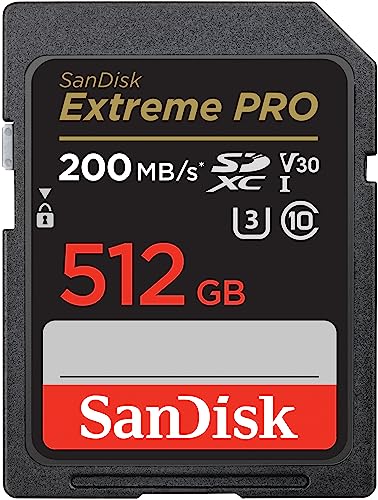
SanDisk 512GB Extreme PRO SD Memory Card
A 512GB SanDisk Extreme PRO card with read speeds up to 200MB/s and write speeds up to 140MB/s, rated V30, U3 and C10 for 4K UHD video.
View on Amazon
Lexar 256GB SILVER SD Memory Card
A 256GB Lexar SILVER card with 225MB/s max read speed and 160MB/s max write speed, rated V30 and U3 for 4K video recording.
View on AmazonLexar 128GB SILVER SD Memory Card
A 128GB Lexar SILVER card with 225MB/s max read speed and 160MB/s max write speed, rated V30 and U3 for 4K video recording.
View on AmazonThese come from our ranked list Best Sdxc Memory Card, which compares them spec by spec.
FAQ
Do flash memory cards need power to keep files?
No. A flash memory card holds files without power, so photos and video stay on the card after you remove it from the camera or reader.
What does V30 mean on a memory card?
V30 is a video speed class rating. SanDisk describes V30 as a sustained video capture rate of 30MB/s, a rating that supports real-time video recording with UHS host devices.
How do I move files from a memory card to a computer?
Insert the card into a card slot or a card reader connected to the computer, then copy the files across. The SanDisk Memory Zone desktop app backs up, organizes and transfers files from the SanDisk card.


