Types of Processors Explained
 By Theo LangUpdated
A processor is the chip that runs the instructions behind everything a computer does, from opening a file to drawing a picture on screen. Processors come in several types, and each type is built for a different kind of work: some handle general computing, some handle graphics, and some combine both jobs on one chip.
The central processor, or CPU
The CPU is the main processor in a computer. It runs the operating system and the programs you open, with its cores and threads working in parallel. A CPU has cores, and each core can work on its own thread of instructions. More cores and threads let a computer keep more programs moving at once, which shows when you switch between a browser, a document and a media player.
The graphics processor, or GPU
A GPU is a processor built to handle many simple calculations at the same time. That design suits drawing images, video and 3D scenes, where the same work repeats across the picture on screen. A computer can have a separate graphics card with its own GPU, or it can rely on graphics built into the main processor. Separate cards suit work where the picture on screen changes constantly.
Processors with built-in graphics
Some processors include graphics on the same chip, so a computer can show a picture without a separate graphics card. This setup suits everyday use such as browsing, office work and video playback, and it keeps the build simpler because there is one less part to fit. One processor here, the AMD Ryzen 7 5700X, requires a discrete graphics card.
Desktop, laptop and server processors
Desktop processors sit in a full-size case with room for cooling and upgrades. Laptop processors are built for a smaller case and a battery, so they balance speed against heat and power use. Server processors are built to run many requests at once, day and night, for services such as websites and shared files. Check the socket and platform a processor lists before buying, since an AM4 processor and an AM5 processor fit different motherboards.
What you need

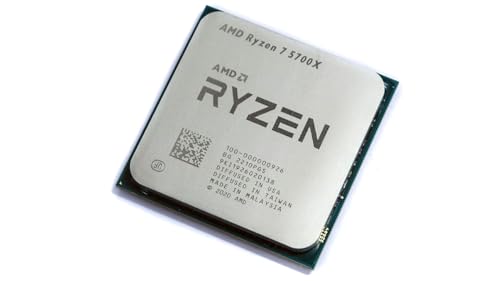
AMD Ryzen 7 5700X 8-Core
An 8-core, 16-thread desktop processor with a 4.6 GHz max boost, 36 MB cache and DDR4-3200 support on the AM4 platform.
View on Amazon
AMD Ryzen 7 5800X3D 8-core
An 8-core, 16-thread desktop processor with 3D V-Cache technology, a 4.5 GHz max boost and 100 MB cache on AM4.
View on Amazon
AMD Ryzen 9 9950X3D 16-Core Processor
A 16-core desktop processor with a 5.7 GHz max boost and a 4.3 GHz base clock, built on Zen 5 for the AM5 platform.
View on Amazon
AMD Ryzen 9 9900X 12-Core
A 12-core, 24-thread desktop processor with a 5.6 GHz max boost, 76 MB cache and DDR5-5600 support on AM5.
View on AmazonThese come from our ranked list Best CPU for Computer, which compares them spec by spec.
FAQ
What does a processor core do?
A core is one unit inside a processor that runs instructions. A processor with more cores can work on more threads at once, which helps when several programs run together.
Do I need a separate graphics card?
Not always. A processor with built-in graphics can run a display for everyday use. Check the processor you choose, since the AMD Ryzen 7 5700X requires a discrete graphics card.
What is the difference between AM4 and AM5?
They are different processor sockets, and each one fits only the processors built for it. AM4 processors pair with DDR4 memory, while AM5 processors pair with DDR5 memory.