What Is RAM Used For in Gaming?
 By Theo LangUpdated
RAM is the short-term memory your PC uses while a game runs. The game, its textures and the data the processor works on sit in RAM, so the processor can reach them without waiting on the drive. When RAM runs out, the PC moves data to the drive instead, which is slower.
What RAM holds while you play
While a game runs, RAM holds the game itself, the level data, textures and the work the processor is doing right now. The processor reads from RAM far faster than from a drive, so keeping the active data in RAM keeps the game moving. Closing other programs frees RAM for the game, and opening a browser with many tabs takes RAM away from it.
What capacity changes
Capacity is how much RAM can hold at once: 8 GB, 16 GB, 32 GB and 64 GB are the sizes sold as kits. A larger kit holds more of the game and more background programs at the same time, so less data has to be moved to the drive. Check the requirements published for your game and for the programs you run with it, and match the kit size to those figures.
What speed and timing do
Speed is how fast data moves through the RAM, shown as a figure such as 3200 MHz or 6000 MHz. The Silicon Power kit and the G.SKILL Ripjaws V are 3200 MHz DDR4 kits. The two Corsair Vengeance kits are 6000 MHz DDR5 kits. Those top speeds are reached through a profile in the BIOS, such as Intel XMP or AMD EXPO. Timing figures such as CL16 describe the delay before data is ready.
Matching RAM to your motherboard
RAM has to match the board: DDR4 fits DDR4 boards and DDR5 fits DDR5 boards, and the two do not mix. Kits are sold in matched sets, such as 2x8GB or 2x16GB, and G.SKILL warns not to mix memory kits, since mixing can cause stability issues or system failure. Check your board's manual or the maker's compatibility list before buying.
What you need

Silicon Power Value Gaming DDR4 RAM
A 16GB DDR4 kit in 2x8GB at 3200 MHz with an aluminum heatsink, Intel XMP support and a lifetime warranty.
View on Amazon
Corsair Vengeance RGB RS DDR5
A 64GB DDR5 kit in 2x32GB up to 6000 MHz with RGB lighting, AMD EXPO and Intel XMP 3.0, and a limited lifetime warranty.
View on Amazon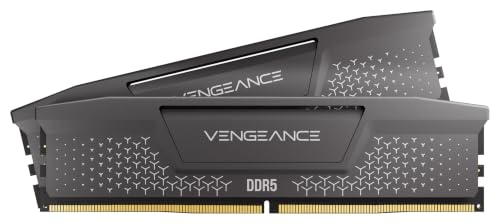
CORSAIR Vengeance RS DDR5
A 32GB DDR5 kit in 2x16GB up to 6000 MHz with AMD EXPO and Intel XMP 3.0, onboard voltage regulation and a limited lifetime warranty.
View on Amazon
G.SKILL RipjawsV DDR4 RAM (XMP)
A 32GB DDR4 kit in 2x16GB up to 3200 MHz with Intel XMP, a JEDEC default profile and a limited lifetime warranty.
View on AmazonThese come from our ranked list Best RAM for Gaming, which compares them spec by spec.
FAQ
What happens when RAM runs out?
More RAM helps only when the game and your other programs fill what you have. If RAM is full, the PC moves data to the drive, which slows things down. Check the requirements published for your game before choosing a kit size.
Can I mix two RAM kits?
No. Kits are sold as matched sets that are designed to run together. G.SKILL warns that mixing memory kits will result in stability issues or system failure, so buy one matched kit in the size you want.
Do I need DDR4 or DDR5 RAM?
It depends on your motherboard: DDR4 boards take DDR4 and DDR5 boards take DDR5. Check your board's manual or spec sheet for the generation it supports, then pick a kit in that generation.