What Is RAM Used For?
 By Theo LangUpdated
RAM is the short-term memory your computer uses while it runs. It holds the applications you have open, the browser tabs you are reading, and the files you are working on, so the processor can reach them quickly. When you close an application, the RAM it used is freed for something else.
What RAM holds while you work
RAM holds the data your processor is working with right now: open applications, browser tabs, documents you are editing, and the files those applications have loaded. Storage, by contrast, holds everything long term: the operating system, your applications, and your files when the computer is off. When you open an application, the computer copies what it needs from storage into RAM. When you close the application, that RAM is freed and can hold something else. RAM clears when the computer shuts down, so nothing stored in RAM survives a restart.
How RAM and the processor work together
The processor does the work, and RAM keeps the data and instructions it needs close at hand. Each time the processor needs a piece of data, it reads it from RAM rather than from storage. A kit's rated speed, such as 6000MT/s or 3200MT/s, is the speed the memory is rated to run at. The kits here list maximum speeds that require overclocking or BIOS adjustments, so the rated speed is reached by enabling the XMP or EXPO profile in the BIOS, not by plugging the kit in alone.
DDR4, DDR5, and kit sizes
Memory comes in generations. The Patriot Viper Venom, the CORSAIR Vengeance RS and the Corsair Vengeance RGB RS kits are DDR5. The G.SKILL RipjawsV kit is DDR4. Check the memory generation your motherboard takes before you buy, and match the kit to it. Kits are sold as matched sets: two 8GB modules for 16GB, two 16GB modules for 32GB, and two 32GB modules for 64GB. Do not mix memory kits, since kits are designed to run together as a set and mixing them can cause stability issues or system failure.
What the numbers on a kit mean
Capacity is the total memory in the kit, such as 16GB, 32GB, or 64GB. Rated speed is given in MT/s or MHz, such as 6000MT/s or 3200MT/s, and it is the speed the memory is rated to run at. The CL number, such as CL36 or CL16-18-18-38, is part of the kit's timings. XMP 3.0 and AMD EXPO are overclock profiles that set the kit to its rated speed, and both need BIOS adjustments to reach the listed maximum.
What you need

Patriot Viper Venom DDR5 RAM
A 16GB DDR5 kit in two 8GB modules rated at 6000MT/s with CL36 timings, XMP 3.0 and AMD EXPO support, and on-die ECC.
View on Amazon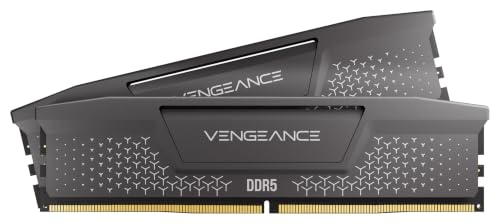
CORSAIR Vengeance RS DDR5
A 32GB DDR5 kit in two 16GB modules rated up to 6000MHz with CL38 timings, AMD EXPO and Intel XMP 3.0 support, and onboard voltage regulation.
View on Amazon
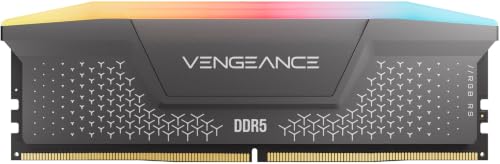
Corsair Vengeance RGB RS DDR5
A 64GB DDR5 kit in two 32GB modules rated up to 6000MHz with CL40 timings, AMD EXPO and Intel XMP 3.0 support, and dynamic RGB lighting.
View on Amazon
G.SKILL RipjawsV DDR4 RAM (XMP)
A 32GB DDR4 kit in two 16GB modules rated up to 3200MT/s with CL16-18-18-38 timings, an Intel XMP overclock profile, and non-ECC U-DIMM modules.
View on AmazonThese come from our ranked list Best RAM for PC, which compares them spec by spec.
FAQ
Is RAM the same as storage?
No. RAM holds what the processor is using right now and clears when the computer shuts down. Storage keeps the operating system, applications, and files when the power is off, so a file saved to storage is still there after a restart.
Can I mix two different RAM kits?
Do not mix kits. Kits are sold as matched sets designed to run together, and mixing them can cause stability issues or system failure. Buy one matched kit in the capacity and generation your motherboard takes.
What do XMP and EXPO do?
They are overclock profiles that set a memory kit to its rated speed. The kits here list maximum speeds that require overclocking or BIOS adjustments, so enable the matching profile in the BIOS to reach the listed speed.