What Happens When You Upgrade RAM?
 By Theo LangUpdated
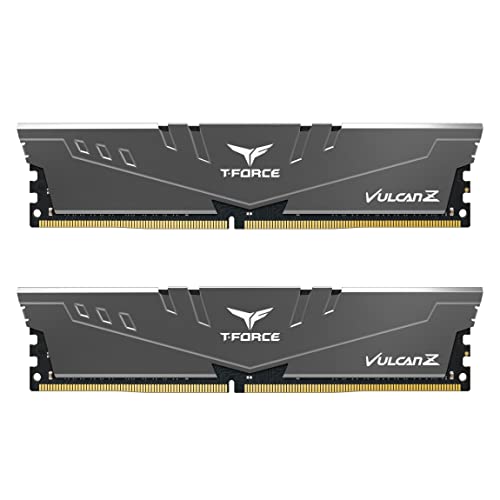
Upgrading RAM gives your PC more memory to hold open apps, browser tabs and game data at once. With more capacity, the system has more room for what you already have open. The kits here run from 16 GB to 64 GB, in DDR5 at 6000 MHz or DDR4 at 3200 MHz.
More capacity for open apps
Capacity is how much data the memory holds at once, and it is the first figure to compare. The Patriot kit is 16 GB in two 8GB modules, the CORSAIR Vengeance RS and the G.SKILL RipjawsV are 32 GB in two 16GB modules, and the CORSAIR Vengeance RGB RS is 64 GB in two 32GB modules. More capacity means more room for open apps, browser tabs and game data. Check the requirements published for your software before you pick a capacity.
Speed, generation and timings
The three DDR5 kits here are rated at 6000 MHz, and the DDR4 kit is rated at 3200 MHz. Timings differ too: the Patriot is CL36, the CORSAIR Vengeance RS is CL38, the CORSAIR Vengeance RGB RS is CL40, and the G.SKILL is CL16-18-18-38. The rated speed may need XMP or EXPO profiles and BIOS adjustments, and the CORSAIR kits note that maximum speed depends on the motherboard and CPU. The G.SKILL kit boots at JEDEC default speed at default BIOS settings.
Matched kits and mixing
Memory kits are sold as matched sets that are designed to run together. The G.SKILL guidance is clear: do not mix memory kits, since mixing can cause stability issues or system failure. If you add memory, add a kit that matches the generation and capacity your motherboard lists. A kit that matches keeps the modules on the same timings and profiles, and the board reads them as one set.
Install it the right way
Shut the PC down and unplug it before you open the case, and follow the steps in the maker's manual. Check the motherboard manual or the memory maker's configurator for validated boards before you buy, as G.SKILL suggests for its kit. Seat the modules fully in the slots the manual names, then switch the PC on and check that the system reports the full capacity. If the speed reads lower than the kit rating, check the XMP or EXPO setting in the BIOS.
What you need

Patriot Viper Venom DDR5 RAM
A 16GB DDR5 kit in two 8GB modules at 6000MT/s with CL36 timings, XMP 3.0 and AMD EXPO support and on-die ECC.
View on Amazon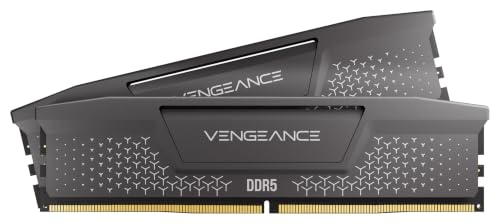
CORSAIR Vengeance RS DDR5
A 32GB DDR5 kit in two 16GB modules up to 6000MHz with AMD EXPO and Intel XMP 3.0 support and onboard voltage regulation.
View on Amazon
Corsair Vengeance RGB RS DDR5
A 64GB DDR5 kit in two 32GB modules up to 6000MHz with AMD EXPO and Intel XMP 3.0 support and addressable RGB lighting.
View on Amazon
G.SKILL RipjawsV DDR4 RAM (XMP)
A 32GB DDR4 kit in two 16GB modules up to 3200MT/s with CL16 timings, an Intel XMP profile and a JEDEC default profile.
View on AmazonThese come from our ranked list Best RAM for PC, which compares them spec by spec.
FAQ
Will more RAM make games run faster?
Not by itself. More RAM gives the system more room for game data, but the result depends on the CPU, graphics card and the game. Check the requirements published for your games before you buy.
Can I mix DDR4 and DDR5 memory?
No. DDR4 and DDR5 are different generations, and a board built for one does not take the other. The DDR5 kits here are rated at 6000 MHz and the DDR4 kit is rated at 3200 MHz. Check the generation your motherboard lists before you buy.
Do I need to change BIOS settings after installing RAM?
The kits here may need XMP or EXPO profiles and BIOS adjustments to reach the listed speed. The G.SKILL kit boots at JEDEC default speed at default BIOS settings. Follow the maker's manual for the settings.