What Does Unbuffered RAM Mean?
 By Theo LangUpdated
Unbuffered RAM is memory with no register between the memory controller and the DRAM chips, so the controller talks to the chips directly. It is the standard type of memory in desktop PCs, sold as UDIMMs, and it is the type fitted in home and office computers. The opposite is registered RAM, which adds a buffer and is made for servers and workstations.
What unbuffered means
In unbuffered RAM, commands from the memory controller reach the DRAM chips without passing through a register. That direct path is why the type is also called unregistered memory. It keeps the design simple and the response time short, which suits desktop PCs. The modules are UDIMMs, the type sold for consumer desktops. UDIMM describes unbuffered memory.
Unbuffered versus registered RAM
Registered RAM, also called RDIMM, places a register between the controller and the DRAM chips. The register holds each command for a moment before passing it on, which helps a server run many modules at once without errors. That extra step adds a small delay, so registered memory is slower to respond than unbuffered memory in the same system. Desktop motherboards are built for unbuffered modules, so check your board manual before buying registered memory.
Unbuffered is not the same as non-ECC
Unbuffered means the controller talks to the DRAM chips directly, while ECC describes error correction. A module can be unbuffered and still carry ECC, and it can be unbuffered without ECC. The G.SKILL RipjawsV kit in this guide is a non-ECC DDR4 U-DIMM, and the Patriot Viper Venom kit lists on-die ECC. Server memory pairs registered modules with ECC, but the two features are separate. Read the listing for both terms before you buy, so you know exactly which combination you are getting.
Check your motherboard before buying
Your motherboard manual lists the memory types the board accepts, including UDIMM or RDIMM, DDR4 or DDR5, and the capacities per slot. Match the module type, generation and capacity to that list. Do not mix unbuffered and registered modules, and do not mix kits that were sold separately, since mixed memory can cause stability problems. If the manual is unclear, look up the board model on the maker site and check its memory support list.
What you need

Patriot Viper Venom DDR5 RAM
A DDR5 UDIMM kit of 16 GB in two 8 GB modules, rated at 6000 MT/s with CL36 timings and support for Intel XMP 3.0 and AMD EXPO.
View on Amazon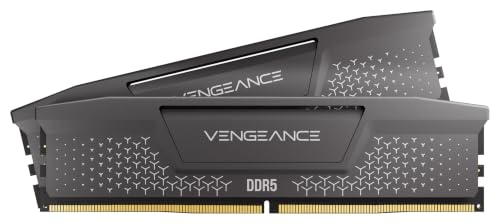
CORSAIR Vengeance RS DDR5
A DDR5 kit of 32 GB in two 16 GB modules, rated up to 6000 MHz with CL38 timings and dual profiles for AMD EXPO and Intel XMP 3.0.
View on Amazon
Corsair Vengeance RGB RS DDR5
A DDR5 kit of 64 GB in two 32 GB modules, rated up to 6000 MHz with CL40 timings, AMD EXPO and Intel XMP 3.0 support, and RGB lighting.
View on Amazon
G.SKILL RipjawsV DDR4 RAM (XMP)
A DDR4 U-DIMM kit of 32 GB in two 16 GB modules, rated up to 3200 MT/s with CL16 timings and an Intel XMP overclock profile.
View on AmazonThese come from our ranked list Best RAM for PC, which compares them spec by spec.
FAQ
Can I use unbuffered RAM in a server?
Some server boards accept unbuffered modules and some accept only registered ones, so check the board manual or the maker memory support list before buying unbuffered modules for a server.
Is unbuffered RAM faster than registered RAM?
Yes, in the same system unbuffered memory responds a little sooner because its commands skip the register. The difference is small, and registered memory exists to keep large server setups stable rather than to win on speed.
How do I know if my RAM is unbuffered?
Check the module for UDIMM, which marks unbuffered memory, or RDIMM, which marks registered memory. Your motherboard manual also lists which type the board accepts.