What Does RAM Plug Into?
 By Theo LangUpdated
RAM plugs into the memory slots on the motherboard, long slots that sit next to the CPU socket. Desktop sticks are called DIMMs, and they fit only in a slot that matches their DDR type, so a DDR5 stick does not fit a DDR4 slot. Check your motherboard manual for the slot type and the layout before you buy.
The slots sit on the motherboard
RAM plugs into DIMM slots on the motherboard, the main board inside a desktop case. The slots are long and sit in a row near the CPU socket, with a clip at each end that holds the stick in place. A desktop stick has a notch along its bottom edge, and the notch lines up with a tab in the slot only when the stick faces the right way. Laptop memory uses smaller slots, and many thin laptops have memory fixed to the board instead of slots. Check the manual for your exact board to find the slots.
Match the DDR type to the slot
DDR4 and DDR5 are different slot types, and the notch on each stick sits in a different place. A DDR5 stick does not fit a DDR4 slot, and a DDR4 stick does not fit a DDR5 slot. The Patriot, Corsair Vengeance RS and Corsair Vengeance RGB RS kits here are DDR5, while the G.SKILL RipjawsV kit is DDR4. Check the slot type in your motherboard manual or on the board itself before you buy, and buy the DDR type your board takes.
Use the slots in matched pairs
Desktop boards run memory in channels, so a kit of two sticks goes into a matched pair of slots. The Patriot kit is 2x8GB, the Corsair Vengeance RS and G.SKILL kits are 2x16GB, and the Corsair Vengeance RGB RS kit is 2x32GB. Put the two sticks from one kit in the slots your manual marks for a pair, and do not mix kits. Keep each kit together as a set, since mixing kits can cause stability issues.
Seat the stick before you power on
Shut the PC down and unplug it first, then open the case and follow the steps in the maker's manual. Press the clips at the ends of the slot open, line the notch on the stick up with the tab in the slot, and press the stick down evenly until the clips close on their own. Do not force a stick that does not sit flat, since a stick that faces the wrong way will not fit. Check that both clips hold the stick, then close the case and plug the PC back in.
What you need

Patriot Viper Venom DDR5 RAM
A 16 GB DDR5 kit in 2x8GB sticks at 6000MT/s with XMP 3.0 and AMD EXPO for a desktop DDR5 board.
View on Amazon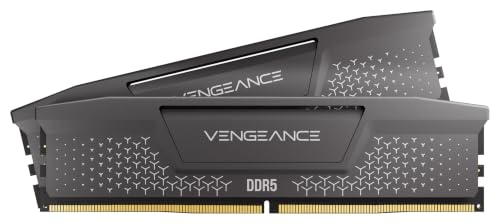
CORSAIR Vengeance RS DDR5
A 32 GB DDR5 kit in 2x16GB sticks at up to 6000MHz with AMD EXPO and Intel XMP 3.0 for a desktop DDR5 board.
View on Amazon
Corsair Vengeance RGB RS DDR5
A 64 GB DDR5 kit in 2x32GB sticks at up to 6000MHz with RGB lighting and AMD EXPO and Intel XMP 3.0 for a desktop DDR5 board.
View on Amazon
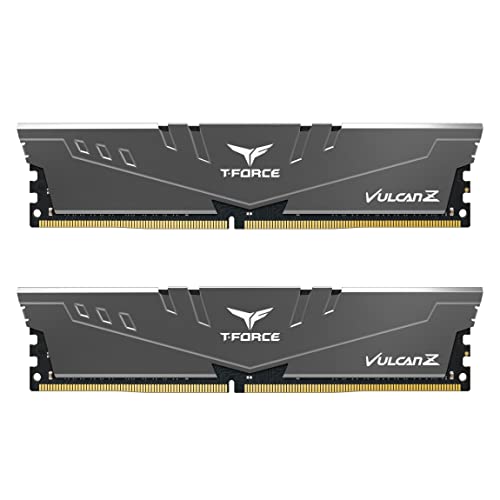
G.SKILL RipjawsV DDR4 RAM (XMP)
A 32 GB DDR4 kit in 2x16GB sticks at up to 3200MT/s with Intel XMP for a desktop DDR4 board.
View on AmazonThese come from our ranked list Best RAM for PC, which compares them spec by spec.
FAQ
Can DDR5 RAM fit in a DDR4 slot?
No. DDR4 and DDR5 sticks have the notch in different places, so each fits only its own slot type. Buy the DDR type your motherboard takes, and check the manual before you buy.
How many RAM sticks does a desktop take?
It depends on the board. A kit of two sticks goes into a matched pair of slots, and your motherboard manual shows the slot count and the layout it marks for a pair.
Does RAM plug into the CPU?
No. RAM plugs into the DIMM slots on the motherboard, next to the CPU socket. The CPU reads and writes through the motherboard, so the sticks sit in the slots and not on the chip itself.