Types of RAM Explained
 By Theo LangUpdated
RAM is the short-term memory a computer uses while it runs, and the type is set by the generation: DDR4 or DDR5. A DDR5 module does not fit a DDR4 slot, so the generation has to match the motherboard. The kits below show what each generation looks like: capacity, rated speed and timings.
DDR4 and DDR5 are the generations
DDR4 and DDR5 are the generations this guide covers. The generation is a physical standard: a DDR4 module and a DDR5 module have different notches, so one does not fit the other's slot. Your motherboard lists one generation, and the RAM you buy has to match it. Check the board's manual or spec sheet for DDR4 or DDR5 before you buy a kit.
Capacity is the size of the kit
Capacity is the total memory in the kit, measured in gigabytes. A kit is sold as matched modules: the Patriot kit is 16GB as 2 modules of 8GB, the Corsair 32GB kit is 2 modules of 16GB, the Corsair 64GB kit is 2 modules of 32GB, and the G.SKILL 32GB kit is 2 modules of 16GB. Buy the kit as a matched set and do not mix two kits.
Rated speed and timings
Rated speed is the frequency the kit is sold at. The Patriot DDR5 kit is rated at 6000MT/s, and the 2 Corsair DDR5 kits are rated at 6000MHz. The G.SKILL DDR4 kit is rated at 3200MT/s. Timings are the CL figure on the kit: CL36 on the Patriot, CL38 and CL40 on the Corsair kits, and CL16 on the G.SKILL. The maximum speed on the Corsair kits and on the G.SKILL kit needs overclocking or BIOS adjustments, so the rated speed is not the speed the kit boots at.
XMP and EXPO profiles
XMP and EXPO are the overclocking profiles stored on the kit. The Patriot and both Corsair kits support Intel XMP and AMD EXPO, while the G.SKILL kit has an Intel XMP profile. Pick the profile that matches your processor in the BIOS, then check the speed your motherboard and CPU reach, since the maximum speed depends on them.
Match the kit to the board
Match three things before you buy: the generation, the capacity and the form factor. The Patriot kit is a UDIMM and the G.SKILL kit is a 288-pin U-DIMM for a desktop PC, and all four kits are desktop memory. Check the board's manual for the generation it takes, the total capacity it takes, and the form factor it takes. A laptop takes a different module size, so a desktop kit does not fit it.
What you need

Patriot Viper Venom DDR5 RAM
A DDR5 kit of 16GB in 2 modules of 8GB, rated at 6000MT/s with CL36 timings, XMP 3.0 and AMD EXPO, and on-die ECC.
View on Amazon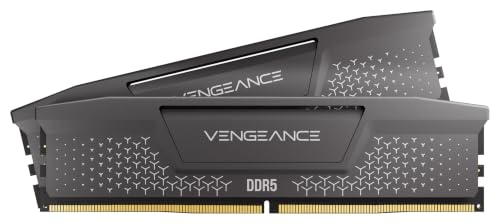
CORSAIR Vengeance RS DDR5
A DDR5 kit of 32GB in 2 modules of 16GB, rated at up to 6000MHz with CL38 timings, AMD EXPO and Intel XMP 3.0, and onboard voltage regulation.
View on Amazon
Corsair Vengeance RGB RS DDR5
A DDR5 kit of 64GB in 2 modules of 32GB, rated at up to 6000MHz with CL40 timings, AMD EXPO and Intel XMP 3.0, and RGB lighting.
View on Amazon
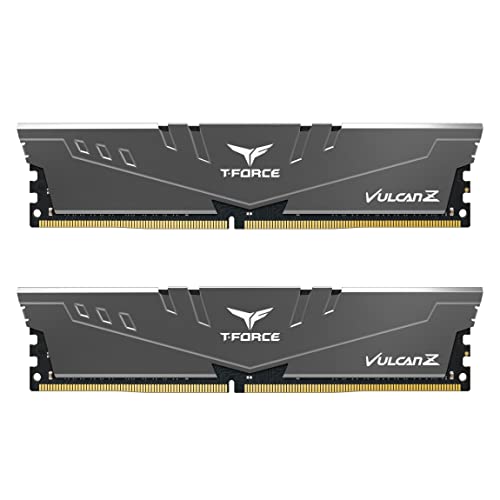
G.SKILL RipjawsV DDR4 RAM (XMP)
A DDR4 kit of 32GB in 2 modules of 16GB, rated at up to 3200MT/s with CL16 timings, an Intel XMP profile, and a 288-pin U-DIMM form factor.
View on AmazonThese come from our ranked list Best RAM for PC, which compares them spec by spec.
FAQ
Can I put DDR5 RAM in a DDR4 slot?
No. DDR4 and DDR5 modules have different notches, so a DDR5 module does not fit a DDR4 slot. Buy the generation your motherboard lists.
Can I mix two RAM kits?
No. Memory kits are sold as matched sets that are designed to run together, and mixing kits can cause stability issues. Buy one kit with the total capacity you want.
Why is my RAM running below its rated speed?
The rated speed needs overclocking or BIOS adjustments, and the kit boots at the default speed first. Turn on the XMP or EXPO profile in the BIOS, then check the speed your motherboard and CPU reach, since the maximum speed depends on them.
What does the CL number on a RAM kit mean?
CL is the timings figure on the kit, written with the rated speed. The kits here show CL36, CL38 and CL40 on DDR5 and CL16 on DDR4. A lower CL number is not a speed on its own, so compare it with the rated speed.