RAM Timings Explained for DDR4
 By Theo LangUpdated
RAM timings are the delay figures printed after the speed on a DDR4 kit, written as a short string such as CL16-20-20-40. The speed, in MHz, says how fast the memory clock runs. The timings say how many clock cycles the memory waits for common operations, so both figures describe responsiveness together.
What the timing string means
A timing string lists several delays in order, separated by hyphens. The TEAMGROUP T-Force Vulcan Z kit is printed as CL16-20-20-40, and the G.SKILL RipjawsV kit is printed as CL16-18-18-38. Each number counts clock cycles for a step in reading or writing data. Lower numbers mean fewer cycles waited for that step at a given clock speed.
CAS latency in plain terms
The CL figure is CAS latency, the delay between a read request and the data being ready. The PNY kit states a CAS Latency of 22 at 3200MHz, while the TEAMGROUP, CORSAIR and G.SKILL kits state CL16 at 3200MHz. At the same clock speed, a lower CL figure means the memory waits fewer cycles for that read step.
Speed and timings together
Speed and timings trade against each other because a higher clock makes each cycle shorter. Two kits at 3200MHz can still differ in responsiveness if one states CL16 and the other states CL22. Compare kits on both figures together, and check the requirements published for your software rather than relying on one number alone.
What a DDR4 kit lists
A kit lists generation, capacity, kit layout, speed, then timings and voltage. The CORSAIR Vengeance LPX kit is a 32GB kit of 2x16GB at up to 3200MHz with CL16-20-20-38 and 1.35V. The PNY kit is a single 16GB module at 3200MHz with CL22 and 1.2V. Voltage and layout are part of the match with your motherboard.
Check the profile your board uses
Rated speed can depend on a profile setting in the BIOS. The TEAMGROUP kit supports XMP2.0, and the G.SKILL RipjawsV kit includes a JEDEC default profile and an Intel XMP memory overclock profile. The CORSAIR and G.SKILL kits state that maximum speed requires overclocking or BIOS adjustments and depends on the motherboard and CPU. Check your motherboard manual for the profile it supports.
What you need
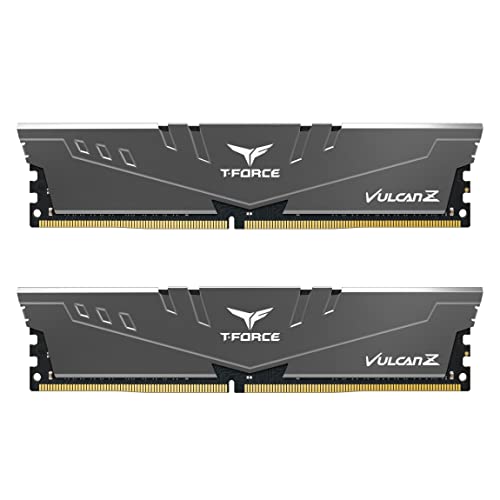
TEAMGROUP T-Force Vulcan Z DDR4 DRAM
A 16GB DDR4 kit of 2x8GB at 3200MHz with CL16-20-20-40 timings and XMP2.0 support.
View on Amazon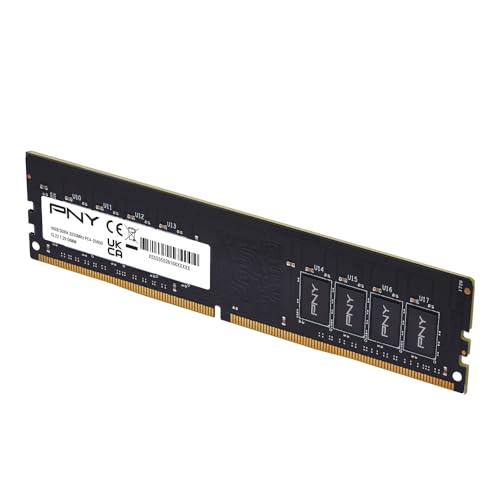
PNY DDR4 16GB
A single 16GB DDR4 module at 3200MHz with CL22 latency and 1.2V operation.
View on Amazon
CORSAIR Vengeance LPX DDR4 RAM
A 32GB DDR4 kit of 2x16GB at up to 3200MHz with CL16-20-20-38 timings and 1.35V.
View on Amazon
G.SKILL RipjawsV DDR4 RAM (XMP)
A 16GB DDR4 kit of 2x8GB at up to 3200MT/s with CL16-18-18-38 timings and 1.35V.
View on AmazonThese come from our ranked list Best DDR4, which compares them spec by spec.
FAQ
Is a lower CL number better?
At the same clock speed, a lower CL figure means fewer cycles waited for a read. The kits here state CL16 or CL22 at 3200MHz. Compare CL together with speed, since a faster clock makes each cycle shorter.
Do timings matter more than speed?
Neither figure tells the whole story alone. Speed sets the clock rate and timings set the waits in cycles. Compare both figures as printed on the kit, then check the requirements published for your software or game.
What is XMP on a DDR4 kit?
XMP is a stored profile that holds the rated speed and timings for the kit. The G.SKILL RipjawsV kit includes a JEDEC default profile and an Intel XMP profile, and it boots at JEDEC default speed at default BIOS settings.
Can I mix two different DDR4 kits?
Memory kits are sold as matched sets designed to run together as a set. The G.SKILL RipjawsV kit states that mixing memory kits will result in stability issues or system failure, so keep one matched kit per system.