How to Add More RAM to Your Computer
 By Theo LangUpdated
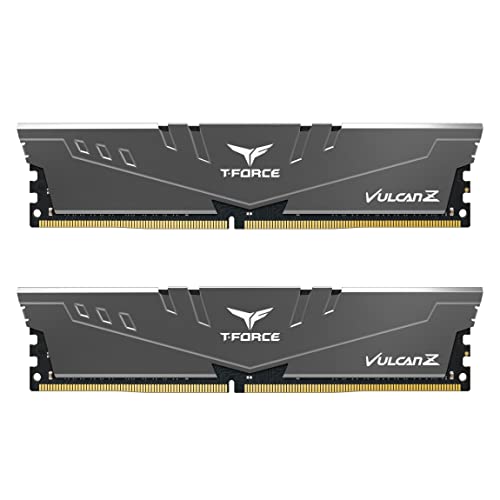
Adding more RAM means fitting a matched memory kit into the free slots on the motherboard, after checking the memory generation and capacity the board accepts. Shut the computer down, unplug it, and follow the maker's manual for the slot order and the clips. The kits below are desktop DDR5 and DDR4 memory in matched pairs.
Check what memory the board takes
Memory generation comes first: DDR4 and DDR5 sticks do not fit the same slots, so check the motherboard manual or the computer maker's spec sheet for the generation, the number of slots and the capacity each slot accepts. Count the sticks already fitted and the free slots before buying: a kit can fill the free slots, or it can replace the sticks already fitted. A matched kit, such as two 8GB sticks or two 16GB sticks, is sold to run together as a set, and mixing kits can cause stability issues or system failure.
Match the speed rating to the board
Rated speeds such as 6000MT/s for DDR5 and 3200MT/s for DDR4 are the speeds the kit is rated to reach with the right settings, not the speed it runs at out of the box. The Corsair and G.SKILL kits note that maximum speed requires overclocking or BIOS adjustments, and that speed and performance depend on the motherboard and processor. Turn on the kit's XMP or EXPO profile in the BIOS if the board supports it, and check the board maker's memory list for the kit before buying.
Fit the sticks in the right slots
Shut the computer down and unplug it before opening the case, and follow the maker's manual for the slot order. Open the clips at each end of a slot, line up the notch on the stick with the key in the slot, and press the stick down evenly until the clips close on their own. Do not force a stick that does not sit flat: check the notch line-up and the generation again. Contact the maker rather than opening a device still under warranty or touching a power supply or battery.
Check that the computer sees the new RAM
After the case is closed and the computer is plugged back in, switch it on and check the memory figure the system reports against the capacity fitted. If the figure is lower than the kit fitted, switch the computer off, unplug it and reseat the sticks, checking that each clip is fully closed. If the computer does not start or reports errors, check the BIOS settings for the XMP or EXPO profile and the board maker's memory list for the kit.
What you need

Patriot Viper Venom DDR5 RAM
A 16GB DDR5 kit in two 8GB sticks, rated at 6000MT/s with CL36 timings, supporting Intel XMP and AMD EXPO.
View on Amazon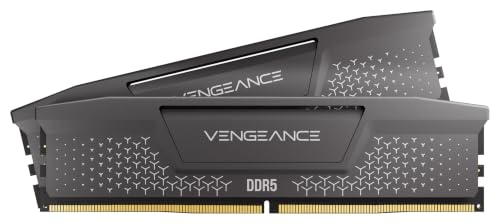
CORSAIR Vengeance RS DDR5
A 32GB DDR5 kit in two 16GB sticks, rated up to 6000MHz with CL38 timings and AMD EXPO and Intel XMP 3.0 support.
View on Amazon
Corsair Vengeance RGB RS DDR5
A 64GB DDR5 kit in two 32GB sticks with RGB lighting, rated up to 6000MHz with CL40 timings and AMD EXPO and Intel XMP 3.0 support.
View on Amazon
G.SKILL RipjawsV DDR4 RAM (XMP)
A 32GB DDR4 kit in two 16GB sticks, rated up to 3200MT/s with CL16 timings and an Intel XMP overclock profile.
View on AmazonThese come from our ranked list Best RAM for PC, which compares them spec by spec.
FAQ
Can DDR4 and DDR5 memory be mixed?
No. DDR4 and DDR5 sticks fit different slots, so a DDR5 kit does not fit a DDR4 board and a DDR4 kit does not fit a DDR5 board. Check the motherboard manual for the generation the board takes before buying.
Does adding RAM speed up my computer?
More memory lets more applications stay open at once, but it does not promise a faster computer. Check the memory figure the software or game publishes as its requirement and compare it with the memory fitted.
Why does my new RAM run slower than its rating?
Rated speeds such as 6000MT/s need the kit's XMP or EXPO profile turned on in the BIOS, and maximum speed depends on the motherboard and processor. Without the profile, the kit runs at the board's default speed.