
Best Graphics Card for Rust (2026): 5 Picks Compared
 By Theo LangUpdated
If you want 16GB of GDDR6 memory for Rust, choose the ASUS Prime Radeon RX 9070 EVO 16GB GDDR6 OC Edition: its boost clock reaches up to 2610 MHz in OC mode, and Dual BIOS lets you switch between Quiet and Performance profiles. The ASUS Prime Radeon RX 9070 XT 16GB GDDR6 OC Edition offers the same 16GB of memory with a boost clock up to 3030 MHz in OC mode.
Your shortlist at a glance
PCKitHQ scores range from 9.2 to 9.8. See how we pick.
| Product and key specifications | Score and retailer |
|---|---|
01 | 9.8PCKitHQ scoreView on Amazon |
02 | 9.7PCKitHQ scoreView on Amazon |
03 | 9.5PCKitHQ scoreView on Amazon |
04 | 9.3PCKitHQ scoreView on Amazon |
05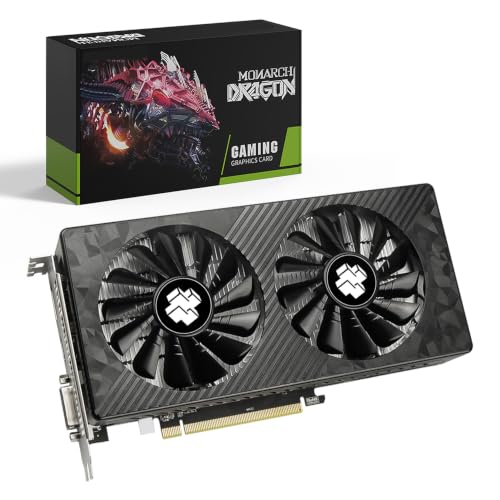 Also Consider MOUGOL AMD Radeon RX 580 8GB GDDR5 | 9.2PCKitHQ scoreView on Amazon |
A closer look at each configuration
ASUS Radeon RX 9070 EVO
score
The 16GB of GDDR6 memory, boost clock up to 2610 MHz in OC mode, and Dual BIOS with Quiet and Performance profiles suit this search.
- Graphics
- Radeon RX 9070
- Video memory
- 16 GB
- Memory type
- GDDR6
- HDMI
- Yes
- Weight
- 2.4 lb
- Warranty
- 3 Year Warranty
In OC mode through GPU Tweak III, the boost clock reaches up to 2610 MHz and the game clock up to 2140 MHz; in default mode those figures are up to 2590 MHz and up to 2120 MHz. Axial-tech fans use a smaller hub for longer blades and a barrier ring that increases downward air pressure, and dual-ball fan bearings last up to twice as long as standard sleeve bearing designs. The phase-change GPU thermal pad helps heat transfer, and 0dB technology is listed for light gaming in relative silence. The 2.5-slot design, PCIe 5.0 interface and HDMI and DP 2.1 outputs round out a card that weighs 2.4 lb and carries a 3 Year Warranty.
Choose it if
- You want 16GB of GDDR6 memory with a boost clock up to 2610 MHz in OC mode
- You want Dual BIOS with Quiet and Performance profiles to switch between
Consider another if
- You need more than 16GB of video memory in your card
- You need a card that weighs under 2.4 lb
ASUS Radeon RX 9070 XT
score
Its 16GB of GDDR6 memory and boost clock up to 3030 MHz in OC mode pair with Axial-tech fans and dual-ball fan bearings.
- Graphics
- Radeon RX 9070 XT
- Video memory
- 16 GB
- Memory type
- GDDR6
- HDMI
- Yes
- Weight
- 3.31 lb
- Warranty
- 3 year
In OC mode through GPU Tweak III, the boost clock reaches up to 3030 MHz and the game clock up to 2480 MHz; in default mode those figures are up to 3010 MHz and up to 2460 MHz. The cooling set matches the top pick: Axial-tech fans with a smaller hub and barrier ring, a phase-change GPU thermal pad, dual-ball fan bearings and a Dual BIOS switch between Quiet and Performance profiles. The 2.5-slot design, PCIe 5.0 interface and HDMI and DP 2.1 outputs match the top pick, and the card weighs 3.31 lb with a 3 year warranty.
Choose it if
- You want 16GB of GDDR6 memory with a boost clock up to 3030 MHz in OC mode
- You want Axial-tech fans with dual-ball fan bearings for cooling
Consider another if
- You need more than 16GB of video memory in your card
- You need a boost clock above 3030 MHz in OC mode
GIGABYTE GeForce RTX 3060 WINDFORCE OC 12G
score
The 12GB of GDDR6 memory on a 192-bit interface, 2nd Generation RT Cores and 3rd Generation Tensor Cores define this card.
- Graphics
- GeForce RTX 3060
- Video memory
- 12 GB
- Memory type
- GDDR6
- Warranty
- 3
The GIGABYTE card integrates 12GB of GDDR6 memory on a 192-bit memory interface and runs on NVIDIA Ampere Streaming Multiprocessors with 2nd Generation RT Cores and 3rd Generation Tensor Cores. Two WINDFORCE fans cool the card. The card is powered by the GeForce RTX 3060, and its part number is GV-N3060WF2OC-12GD Rev2.0. Check the card against the 12GB memory figure and the 192-bit interface when you compare it with the other cards in this guide.
Choose it if
- You want 12GB of GDDR6 memory on a 192-bit memory interface
- You want 2nd Generation RT Cores and 3rd Generation Tensor Cores
Consider another if
- You need more than 12GB of video memory in your card
- You need a memory interface wider than 192-bit
ASRock Radeon RX 7600 Challenger
score
Its 8GB of GDDR6 memory, boost clock up to 2695MHz and three DisplayPort 1.4a outputs suit a multi-display setup.
- Graphics
- Radeon RX 7600
- Video memory
- 8 GB
- Memory type
- GDDR6
- HDMI
- Yes
- DisplayPort
- Yes
- Weight
- 2 lb
- Warranty
- 3 years
The ASRock card uses the RX 7600 GPU with 32 CUs and 2048 stream processors, a boost clock up to 2695MHz and a game clock of 2280MHz. Its 8GB of GDDR6 memory runs on a 128-bit bus at 18 Gbps. The card is a 2-slot design measuring 269.2 x 131.8 x 40.3 mm, uses a single 8-pin power connector, and the maker recommends a 550W PSU. Dual fans with a striped axial design and an ultra-fit heatpipe cool the card, 0dB Silent stops the fans under low load, and a metal backplate adds rigidity. Three DisplayPort 1.4a outputs and one HDMI 2.1 output support up to 4 displays at resolutions up to 8K.
Choose it if
- You want 8GB of GDDR6 memory on a 128-bit bus at 18 Gbps
- You want three DisplayPort 1.4a outputs and one HDMI 2.1 output
Consider another if
- You need more than 8GB of video memory in your card
- You need a boost clock above 2695MHz for your card
MOUGOL AMD Radeon RX 580 8GB GDDR5
score
The 8GB of GDDR5 memory, 2048 stream processors and HDMI, DisplayPort and DVI outputs define this compact card.
- Graphics
- Radeon RX 580
- Memory type
- GDDR5
- HDMI
- Yes
- DisplayPort
- Yes
- Warranty
- 1 Year Manufacturer
The MOUGOL card uses the Radeon RX 580 with 2048 stream processors and a 1206 MHz core clock, 8GB of GDDR5 memory on a 256-bit interface, and a PCIe X16 3.0 connection. HDMI, DisplayPort and DVI outputs support triple-monitor setups. The dual-fan cooling system uses high-efficiency heat pipes, and intelligent fan control adjusts airflow between light work and heavy loads. The card measures 240 x 135 x 45 mm, supports DirectX 12, Vulkan and OpenGL 4.6, and carries a 1 Year Manufacturer warranty.
Choose it if
- You want HDMI, DisplayPort and DVI outputs for three displays
- You want a 240 x 135 x 45 mm card for a compact desktop
Consider another if
- You need GDDR6 memory instead of the GDDR5 memory here
- You need a PCIe 4.0 interface instead of PCIe 3.0
Make the choice for your setup
Compare video memory first
Video memory sets how much texture data the card holds, so start with the memory figure each card states. The two ASUS cards carry 16GB of GDDR6 memory, the GIGABYTE card carries 12GB of GDDR6 memory on a 192-bit interface, the ASRock card carries 8GB of GDDR6 memory on a 128-bit bus at 18 Gbps, and the MOUGOL card carries 8GB of GDDR5 memory on a 256-bit interface. Match the memory figure to the games and settings you run, and keep the memory type and the interface width beside the capacity when you compare cards. The memory figure alone does not describe the whole card, so read the clock speeds and cooling beside it.
Read clock speeds as rated figures
The two ASUS cards, the ASRock card and the MOUGOL card state rated clock figures, so compare those numbers as figures from the maker, not as measured results. The ASUS RX 9070 reaches up to 2610 MHz boost and up to 2140 MHz game clock in OC mode, and the ASUS RX 9070 XT reaches up to 3030 MHz boost and up to 2480 MHz game clock in OC mode. The ASRock RX 7600 states a boost clock up to 2695MHz and a game clock of 2280MHz, and the MOUGOL RX 580 states a 1206 MHz core clock. Compare the GIGABYTE RTX 3060 on its 12GB of GDDR6 memory, 2nd Generation RT Cores and 3rd Generation Tensor Cores instead. A related shortlist covers the Best GPU for Amd.
Check size, power and outputs
A card has to fit the case and connect to the monitor, so check the size, power and outputs the maker states for it. The ASUS cards use a 2.5-slot design, and the ASRock card is a 2-slot card measuring 269.2 x 131.8 x 40.3 mm with a single 8-pin power connector and a recommended 550W PSU. The MOUGOL card measures 240 x 135 x 45 mm. For outputs, the ASRock card has three DisplayPort 1.4a outputs and one HDMI 2.1 output, the MOUGOL card has HDMI, DisplayPort and DVI, and both ASUS cards have HDMI and DP 2.1. Check the outputs against the ports on your monitor before you choose.
For a wider shortlist, start with Best Graphics Card for 250.
FAQ: Graphics Card for Rust
How much video memory do these graphics cards have?
The two ASUS cards have 16GB of GDDR6 memory, the GIGABYTE card has 12GB of GDDR6 memory, and the ASRock and MOUGOL cards have 8GB of memory. The ASRock card uses GDDR6 memory, while the MOUGOL card uses GDDR5 memory.
Which cards here use a Dual BIOS switch?
The two ASUS Prime cards have a Dual BIOS switch that toggles between Quiet and Performance BIOS profiles, so check the ASUS cards when you want that switch. GPU Tweak III software provides performance tweaking, thermal control and system monitoring on both ASUS cards.
What outputs do these graphics cards offer?
Both ASUS cards have HDMI and DP 2.1 outputs. The ASRock card has three DisplayPort 1.4a outputs and one HDMI 2.1 output and supports up to 4 displays, and the MOUGOL card has HDMI, DisplayPort and DVI outputs for triple-monitor setups.

