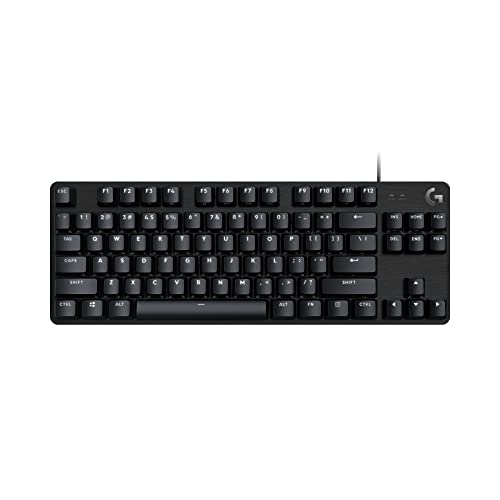
Why Are Gaming Keyboards So Loud?
 By Theo LangUpdated
Gaming keyboards are loud because the mechanical switches inside them make a sound on every keypress: the stem hits the bottom of the switch, and the hollow case turns that tap into a click. The sound comes from the switch, the keycap and the case together, so a loud board is loud by design, not by fault.
The switch makes the sound
A mechanical switch moves when you press a key, and the shaft hits the positioning plate at the bottom of the press. That hit is the click or thock you hear, and it repeats on every key. The AULA boards counter it with five layers of filling silencer between the PCB, the positioning plate and the shaft, plus an extended silicone pad. A linear switch, like the red switch in the Redragon K671, needs less force to press, while the AULA boards use pre-lubed switches for a smooth typing feel.
The case and plate shape the sound
The case and the plate decide how much of the switch sound reaches your ears. Both AULA boards list an advanced structure with an extended integrated silicone pad and PCB single key slotting, for a softer and more elastic hand feel, and the line white board also lists a gasket structure. Five layers of filling silencer fill the gap between the PCB, the positioning plate and the shaft, giving a solid feel. Compare the build of each board in the listing before you buy.
Keycaps and layout add to it
Keycaps shape the sound a switch makes, and the AULA boards use side-printed PBT keycaps made by double injection molding and heat sublimation. The AULA boards are 75% boards with 81 keys, keeping the arrow keys while saving desk space. The Redragon K521 is a 104-key board with 12 multimedia keys, and its keys are listed as mechanical feeling rather than mechanical. Check the switch type and the layout in the listing, since both shape what you hear.
How to make one quieter
Start with the switch. A hot-swappable board lets you change switches without soldering: the AULA boards take 3-pin or 5-pin switches, and the Redragon K671 takes hot-swappable red switches and comes with 4 spare switches. Pre-lubed switches and a board with silencer layers start quieter, so check both in the listing. If your board is not hot-swappable, changing switches means soldering, so check that detail before you buy.
What you need

AULA F75 Pro Wireless Mechanical Keyboard
A 75% wireless keyboard with pre-lubed LEOBOG reaper switches, an advanced structure with 5 silencer layers, hot-swappable 3-pin and 5-pin sockets and a knob.
View on Amazon
AULA F75 Pro Wireless Mechanical Keyboard
A 75% wireless keyboard with pre-lubed LEOBOG star vector switches, a gasket structure with 5 silencer layers, hot-swappable sockets and a 1-year warranty.
View on Amazon
Redragon K521 Upgrade Rainbow LED Gaming Keyboard
A wired 104-key keyboard with a mechanical feel, rainbow LED backlight, 19-key anti-ghosting and 12 multimedia keys.
View on Amazon
Redragon Mechanical Gaming Keyboard Wired
A wired mechanical keyboard with a hot-swappable linear red switch, 11 backlit modes, 5 brightness levels and a 24-month warranty.
View on AmazonThese come from our ranked list Best Gaming Keyboard, which compares them spec by spec.
FAQ
Are all gaming keyboards loud?
No. The sound depends on the switch and the build. The two AULA boards list pre-lubed switches and 5 silencer layers, while the Redragon K521 is listed as mechanical feeling rather than mechanical.
Can I make my gaming keyboard quieter?
Yes, if the board is hot-swappable. The AULA boards take 3-pin or 5-pin switches, and the Redragon K671 takes hot-swappable red switches, so you can fit quieter switches without soldering.
Do linear red switches change how a keyboard feels?
Yes. A linear red switch needs less force to press, and pre-lubed switches bring a smooth typing feel, so the switch type shapes both sound and feel. Check the switch type in the listing before you buy.