What Is a PE Foam Keyboard?
 By Theo LangUpdated
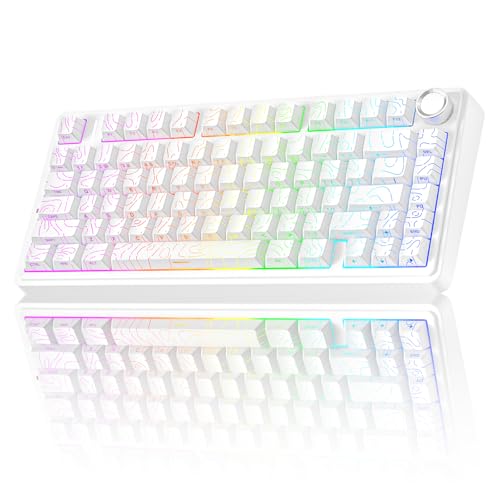
A PE foam keyboard is a mechanical keyboard with a sheet of polyethylene foam fitted inside the case, often between the plate and the PCB. The foam absorbs vibration and hollow sound from each keystroke, so typing sounds deeper and softer instead of sharp and pingy. It is a sound-tuning layer, not a switch type, and feel comes from the whole build, mount and foam layers included.
Where the foam sits
The foam is a thin sheet that sits inside the keyboard case, often between the metal plate that holds the switches and the PCB underneath it. Some keyboards also put foam under the PCB or along the bottom of the case. The sheet fills empty space inside the case, so sound from each keystroke has less room to bounce around and echo.
What it does to the sound
PE foam absorbs vibration and takes the hollow ring out of typing. Keystrokes sound deeper, softer and more muted, closer to a dull thock than a sharp clack. The SOLAKAKA A99 Pro lists five layers of cushioning pads with noise-dampening cotton, and the KiiBoom Phantom98 Lite lists latex sandwich foam, an IXPE switch pad, PET sound dampening film, bottom foam and bottom silicone, but no foam layer fixes rattling stabilizers or loud switches on its own. It changes the tone of the sound, not the volume alone.
PE foam and other foam layers
PE foam is one layer in a stack, not the whole story. A keyboard can also have foam under the PCB, a switch pad above the PCB, a sound-dampening film and silicone at the bottom of the case. Each layer damps a different part of the sound, and makers combine them to tune the typing sound. When you compare keyboards, look at the full list of foam layers, not one name alone.
Does PE foam change the feel
The foam sits below the switches, so it does not change how far a key travels or how much force it takes to press. What you feel comes from the switches, the stabilizers and the keycaps, plus the mount and the foam layers that hold the plate and fill the case. A keyboard with PE foam can still feel firm or soft depending on those parts. Judge the sound and the feel as two separate things when you choose a board.
What you need

AULA S99 Gaming Keyboard
A 96% membrane keyboard with tri-mode Bluetooth, 2.4GHz and USB-C connections, RGB backlighting and full-key macro programming.
View on Amazon
YUNZII B98 PRO 96% Wireless Mechanical Keyboard (Blue
A 96% gasket-mount keyboard with a five-layer filling structure, pre-lubed switches, hot-swappable sockets and RGB backlighting.
View on Amazon
SOLAKAKA A99 Pro Mechanical Keyboard
A 96% keyboard with a gasket structure, five layers of cushioning pads, noise-dampening cotton, an LCD screen and a metal knob.
View on Amazon
KiiBoom Phantom98 Lite 96% Wireless Mechanical Gaming Keyboard
A 96% gasket keyboard with latex sandwich foam, an IXPE switch pad, PET film, bottom foam, hot-swappable switches and VIA support.
View on AmazonThese come from our ranked list Best 96 Keyboard, which compares them spec by spec.
FAQ
Is PE foam the same as case foam?
No. PE foam is one type of foam layer, fitted between the plate and the PCB. Case foam sits under the PCB, and other layers such as switch pads and sound-dampening film sit elsewhere in the case.
Does PE foam remove all the sound?
No. PE foam is one layer in the case: the SOLAKAKA A99 Pro lists five layers of cushioning pads with noise-dampening cotton pads, and the KiiBoom Phantom98 Lite lists latex sandwich foam, an IXPE switch pad, PET sound dampening film, bottom foam and bottom silicone. Switches, stabilizers and keycaps have a bigger effect on how loud a keyboard is.
Do all mechanical keyboards have PE foam?
No. Some use other foam layers or none at all, and the foam layout varies from board to board. Check the product description for the foam layers it lists before you buy.