
Best Graphics Cards in Order (2026): Our 6 Picks Ranked
 By Theo LangUpdated
Choose the ASUS PRIME GeForce RTX 5060 Ti 16GB GDDR7 Gaming Graphics if you want 16GB of GDDR7 memory, a 2.5-slot design and Dual BIOS in a Blackwell card with DLSS 4. The ASUS Dual matches it on memory and adds a 2632MHz boost clock, while the FREEZEMAT RTX 5070 Ti OC brings triple 90mm fans in a 2.98-slot design. The MOUGOL, MAXSUN and GIGABYTE cover smaller memory sizes.
Your shortlist at a glance
PCKitHQ scores range from 9.2 to 9.8. See how we pick.
| Product and key specifications | Score and retailer |
|---|---|
01 | 9.8PCKitHQ scoreView on Amazon |
02 | 9.7PCKitHQ scoreView on Amazon |
03 | 9.6PCKitHQ scoreView on Amazon |
04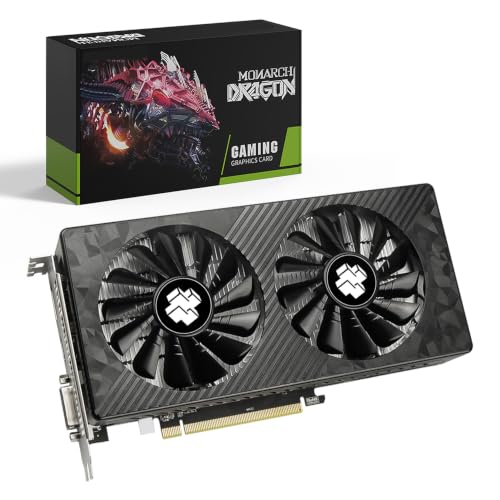 Also Consider MOUGOL AMD Radeon RX 580 8GB GDDR5 | 9.4PCKitHQ scoreView on Amazon |
05 Also Consider MAXSUN AMD Radeon RX 550 4GB GDDR5 | 9.3PCKitHQ scoreView on Amazon |
06 Also Consider GIGABYTE GeForce RTX 5060 WINDFORCE OC 8G | 9.2PCKitHQ scoreView on Amazon |
A closer look at each configuration
ASUS PRIME GeForce RTX 5060 Ti 16GB
score
The ASUS PRIME pairs 16GB of GDDR7 memory with a 2.5-slot design, Dual BIOS and Axial-tech fans for a compact Blackwell build.
- Graphics
- GeForce RTX 5060 Ti
- Video memory
- 16 GB
- Memory type
- GDDR7
- HDMI
- Yes
- Weight
- 1.76 lb
The ASUS PRIME uses the NVIDIA Blackwell architecture with DLSS 4 and 758 AI TOPS. Its boost clock is 2602MHz in OC mode and 2572MHz in default mode. The 2.5-slot design suits SFF-Ready builds, and Axial-tech fans with dual-ball bearings move air through the card. 0dB technology lets you enjoy light gaming in relative silence, and the Dual BIOS switch toggles between Quiet and Performance profiles. A protective metal backplate adds rigidity.
Choose it if
- You want 16GB of GDDR7 video memory
- You want a 2.5-slot card with Dual BIOS
Consider another if
- You need more than 16GB of video memory
- You need a boost clock above 2602MHz
ASUS Dual
score
The ASUS Dual pairs 16GB of GDDR7 memory with a 2632MHz OC mode boost clock and a 2.5-slot design.
- Graphics
- GeForce RTX 5060 Ti
- Video memory
- 16 GB
- Memory type
- GDDR7
- HDMI
- Yes
- DisplayPort
- Yes
- Weight
- 1.45 lb
The ASUS Dual uses the NVIDIA Blackwell architecture with DLSS 4 and 767 AI TOPS. Its boost clock is 2632MHz in OC mode and 2602MHz in default mode. The 2.5-slot design suits small chassis, and Axial-tech fans with dual-ball bearings move air through the card. 0dB technology lets you enjoy light gaming in relative silence, and Dual BIOS toggles between Quiet and Performance profiles. The card weighs 1.45 lb and carries HDMI 2.1b and DisplayPort 2.1b on PCIe 5.0, with a 3 year warranty.
Choose it if
- You want a 2632MHz boost clock in OC mode
- You want 16GB of GDDR7 video memory
Consider another if
- You need more than 16GB of video memory
- You need a boost clock above 2632MHz in OC mode
NVIDIA GeForce RTX 5070 Ti OC Triple-Fan Graphics Card
score
The FREEZEMAT RTX 5070 Ti OC pairs 16GB of GDDR7 memory with triple 90mm fans and a 2.98-slot design.
- Video memory
- 16 GB
- Memory type
- GDDR7
- HDMI
- Yes
- Weight
- 2.87 lb
- Warranty
- 3-year
The FREEZEMAT RTX 5070 Ti OC uses the NVIDIA Blackwell architecture with DLSS 5 and a boost clock of 2572MHz. Its triple 90mm axial fans use counter-rotation and dual-ball bearings, with up to 15% more airflow, and Stealth Mode stops the fans at low temperatures. A vapor chamber and an open aluminum backplate sit inside the 2.98-slot design. The card carries 16GB of GDDR7 memory on a 256-bit interface, runs on PCIe 5.0 with an HDMI output, weighs 2.87 lb and carries a 3-year warranty.
Choose it if
- You want triple 90mm axial fans for cooling
- You want 16GB of GDDR7 video memory
Consider another if
- You need more than 16GB of video memory
- You need a card slimmer than a 2.98-slot design
MOUGOL AMD Radeon RX 580 8GB GDDR5
score
The MOUGOL RX 580 pairs 8GB of GDDR5 memory with 2048 stream processors and HDMI, DisplayPort and DVI outputs.
- Graphics
- AMD Radeon RX 580
- Memory type
- GDDR5
- HDMI
- Yes
- DisplayPort
- Yes
The MOUGOL RX 580 uses 2048 stream processors with a 1206MHz core clock and 8GB of GDDR5 memory on a 256-bit interface. Its outputs are HDMI, DisplayPort and DVI for triple-monitor setups. The dual-fan cooling system uses heat pipes, and the card measures 240x135x45mm, or 9.45x5.31x1.77 inches. It supports DirectX 12, Vulkan and OpenGL 4.6, and runs on PCIe X16 3.0. The card carries a 1 Year Manufacturer warranty.
Choose it if
- You want HDMI, DisplayPort and DVI outputs together
- You want a 240mm card for a mid-tower build
Consider another if
- You need more than 8GB of video memory
- You need GDDR7 memory instead of GDDR5
MAXSUN AMD Radeon RX 550 4GB GDDR5
score
The MAXSUN RX 550 pairs 4GB of GDDR5 memory with 512 stream processors and a 9cm fan in an ITX card.
- Graphics
- AMD Radeon RX 550
- Memory type
- GDDR5
- HDMI
- Yes
- DisplayPort
- Yes
- Weight
- 0.44 lb
The MAXSUN RX 550 uses 512 stream processors with a boost clock up to 1183MHz and 4GB of GDDR5 memory at 6000MHz on a 128-bit interface. A 9cm fan cools the card, and the silver plated PCB uses solid capacitors. The card supports DirectX 12, Shader Model 5.0 and OpenGL 4.6, with 4K video decode, and its outputs are DVI-D, HDMI and DisplayPort. It weighs 0.44 lb and carries a 3 Year Warranty.
Choose it if
- You want an ITX card with a 9cm fan
- You want 4K video decode from the card
Consider another if
- You need more than 4GB of video memory
- You need a boost clock above 1183MHz
GIGABYTE GeForce RTX 5060 WINDFORCE OC 8G
score
The GIGABYTE RTX 5060 WINDFORCE OC pairs 8GB of GDDR7 memory with a 128-bit interface and PCIe 5.0.
- Graphics
- GeForce RTX 5060
- Memory type
- GDDR7
- HDMI
- Yes
- DisplayPort
- Yes
The GIGABYTE RTX 5060 WINDFORCE OC is powered by the GeForce RTX 5060 on the NVIDIA Blackwell architecture with DLSS 4. It carries 8GB of GDDR7 memory on a 128-bit interface, and the WINDFORCE cooling system moves air through the card. The card runs on PCIe 5.0 with DisplayPort and HDMI outputs. The card is manufactured by NVIDIA and carries model number GV-N5060WF2OC-8GD. The card carries a 3 Year Manufacturer warranty.
Choose it if
- You want 8GB of GDDR7 memory on a 128-bit interface
- You want PCIe 5.0 with DisplayPort and HDMI
Consider another if
- You need more than 8GB of video memory
- You need a memory interface wider than 128-bit
Make the choice for your setup
Match video memory to the workload
Three cards carry 16GB of GDDR7 video memory: the ASUS PRIME, the ASUS Dual and the FREEZEMAT RTX 5070 Ti OC. The MOUGOL RX 580 and the GIGABYTE RTX 5060 each carry 8GB, with GDDR5 on the MOUGOL and GDDR7 on the GIGABYTE. The MAXSUN RX 550 carries 4GB of GDDR5. Memory type matters alongside capacity: GDDR7 appears on the three 16GB cards and the GIGABYTE, while GDDR5 appears on the MOUGOL and the MAXSUN. The FREEZEMAT pairs its 16GB with a 256-bit interface, the GIGABYTE pairs its 8GB with a 128-bit interface, and the MAXSUN pairs its 4GB with a 128-bit interface. Compare the installed memory figure against the files and workloads you plan to run locally.
Compare slot size and cooling
The ASUS PRIME and ASUS Dual each use a 2.5-slot design with Axial-tech fans, and the FREEZEMAT uses a 2.98-slot design with triple 90mm axial fans. The PRIME and Dual use dual-ball fan bearings and 0dB technology, while the FREEZEMAT uses dual-ball bearings, counter-rotation and Stealth Mode, which stops the fans at low temperatures. The PRIME adds a protective metal backplate, and the FREEZEMAT adds a vapor chamber with an open aluminum backplate. The MOUGOL measures 240x135x45mm with dual-fan cooling and heat pipes, and the MAXSUN uses a single 9cm fan on an ITX card. The GIGABYTE uses the WINDFORCE cooling system. Match the slot width and the stated card length against the space inside the case before choosing. For a closely related choice, read our guide to the Best Graphics Card Out.
Check outputs, interface and warranty
Four cards run on PCIe 5.0: the ASUS PRIME, the ASUS Dual, the FREEZEMAT and the GIGABYTE. The MOUGOL and the MAXSUN run on PCIe X16 3.0. For outputs, the PRIME carries HDMI and DisplayPort 2.1, and the Dual carries HDMI 2.1b and DisplayPort 2.1b. The FREEZEMAT carries HDMI. The MOUGOL adds DVI to HDMI and DisplayPort for triple-monitor setups, and the MAXSUN carries DVI-D, HDMI and DisplayPort. Five cards carry a 3 year warranty: the PRIME, Dual, FREEZEMAT, MAXSUN and GIGABYTE. The MOUGOL carries a 1 Year Manufacturer warranty. Compare the outputs and the interface against the monitor and the motherboard in the build.
For a wider shortlist, start with Best Graphics Cards for Machine Learning.
FAQ: Graphics Cards in Order
Which graphics cards here have 16GB of video memory?
The ASUS PRIME, the ASUS Dual and the FREEZEMAT each carry 16GB of GDDR7 video memory. The MOUGOL and the GIGABYTE each carry 8GB, and the MAXSUN carries 4GB of GDDR5 memory. GDDR7 covers the three 16GB cards and the 8GB GIGABYTE, while GDDR5 covers the MOUGOL and the MAXSUN.
Which card has the highest boost clock in this guide?
The ASUS Dual has an OC mode boost clock of 2632MHz, above the PRIME at 2602MHz in OC mode and the FREEZEMAT at 2572MHz. The MOUGOL has a 1206MHz core clock, and the MAXSUN has a boost clock up to 1183MHz.
Which cards use PCIe 5.0?
The ASUS PRIME, the ASUS Dual, the FREEZEMAT and the GIGABYTE run on PCIe 5.0. The MOUGOL and the MAXSUN run on PCIe X16 3.0, so check the interface on the motherboard for the card before choosing.


