Best Graphics Card with 3 Fans (2026): Top 6 by the Specs
 By Theo LangUpdated
If you want a triple-fan card built around the GeForce RTX 4060 with 8GB of GDDR6 memory and DLSS 3 support, choose the Gigabyte GeForce RTX 4060 Gaming OC 8G Graphics Card. It carries 3X WINDFORCE fans, and its 128-bit memory interface pairs with 8GB of GDDR6 memory. Your choice turns on video memory, memory type, and card layout.
Your shortlist at a glance
PCKitHQ scores range from 9.2 to 9.8. See how we pick.
| Product and key specifications | Score and retailer |
|---|---|
01 | 9.8PCKitHQ scoreView on Amazon |
02 | 9.7PCKitHQ scoreView on Amazon |
03 | 9.6PCKitHQ scoreView on Amazon |
04 | 9.4PCKitHQ scoreView on Amazon |
05 | 9.3PCKitHQ scoreView on Amazon |
06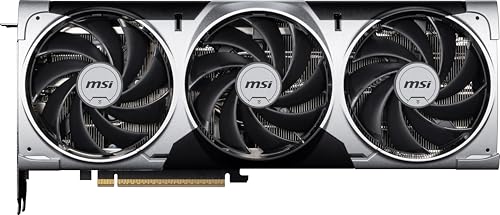 | 9.2PCKitHQ scoreView on Amazon |
A closer look at each configuration
GIGABYTE GeForce RTX 4060 Gaming OC 8G
score
The Gigabyte GeForce RTX 4060 Gaming OC 8G pairs a GeForce RTX 4060 with 8GB of GDDR6 memory and 3X WINDFORCE fans.
- Graphics
- GeForce RTX 4060
- Video memory
- 8 GB
- Memory type
- GDDR6
- Weight
- 2.2 lb
- Warranty
- 3
This Gigabyte card is built on the GeForce RTX 4060 with 8GB of GDDR6 memory on a 128-bit interface. Its 3X WINDFORCE fans give it the triple-fan layout this search asks for. NVIDIA DLSS 3 support comes from the Ada Lovelace architecture, with 4th Generation Tensor Cores rated up to 4x performance with DLSS 3 and 3rd Generation RT Cores rated up to 2x ray tracing performance. The card weighs 2.2 lb.
Choose it if
- You want a GeForce RTX 4060 card with 3X WINDFORCE fans
- You want 8GB of GDDR6 memory on a 128-bit interface
Consider another if
- You need 16GB of video memory for your workload
- You need a 2587 MHz boost clock
GIGABYTE GeForce RTX 4060 Ti Eagle OC
score
The Gigabyte GeForce RTX 4060 Ti Eagle OC 8G pairs a GeForce RTX 4060 Ti with 8GB of GDDR6 memory and 3X WINDFORCE fans.
- Graphics
- GeForce RTX 4060 Ti
- Video memory
- 8 GB
- Memory type
- GDDR6
- Weight
- 2.2 lb
- Warranty
- 3
This Gigabyte card is built on the GeForce RTX 4060 Ti with 8GB of GDDR6 memory on a 128-bit interface. Its feature set includes the WINDFORCE Cooling System, RGB Fusion, Dual BIOS, and a protection metal back plate. NVIDIA DLSS 3 support comes from the Ada Lovelace architecture, with 4th Generation Tensor Cores rated up to 4x performance with DLSS 3 and 3rd Generation RT Cores rated up to 2x ray tracing performance.
Choose it if
- You want a GeForce RTX 4060 Ti card with 3X WINDFORCE fans
- You want a metal back plate and Dual BIOS support
Consider another if
- You need 16GB of video memory for your workload
- You need GDDR7 memory rather than GDDR6 memory
MSI GeForce RTX 5080 16G Gaming Trio
score
The MSI GeForce RTX 5080 16G Gaming Trio OC pairs a GeForce RTX 5080 with 16GB of GDDR7 memory and three STORMFORCE fans.
- Graphics
- GeForce RTX 5080
- Video memory
- 16 GB
- Memory type
- GDDR7
- HDMI
- Yes
- DisplayPort
- Yes
- Weight
- 2.2 lb
This MSI card is built on the GeForce RTX 5080 with 16GB of GDDR7 memory on a 256-bit interface at 30Gbps. Its TRI FROZR 4 cooling uses three STORMFORCE fans, and Gaming and Silent Mode are part of its feature set. The card uses PCIe 5.0 and carries HDMI 2.1b and DisplayPort 2.1b connections. The card weighs 2.2 lb. TRI FROZR 4 cooling and the three STORMFORCE fans give the card the triple-fan layout this search asks for.
Choose it if
- You want 16GB of GDDR7 memory on a 256-bit interface
- You want HDMI 2.1b and DisplayPort 2.1b connections
Consider another if
- You need a 2587 MHz boost clock
- You need a 2.4-slot card for a compact case
PNY NVIDIA GeForce RTX 5070 OC Triple-Fan
score
The PNY NVIDIA GeForce RTX 5070 OC Triple-Fan pairs 12GB of GDDR7 memory with three axial fans and a 2587 MHz boost clock.
- Video memory
- 12 GB
- Memory type
- GDDR7
- Weight
- 2.2 lb
- Warranty
- 3-Year Limited Warranty
This PNY card carries 12GB of GDDR7 memory on a 192-bit interface with a factory-tuned 2587 MHz boost clock. Three axial fans work with a dense heatsink and a vented metal backplate to cool the card. The card is SFF-Ready, uses PCIe 5.0, and fits a 2.4-slot layout. It uses the NVIDIA Blackwell architecture with DLSS 4.5 support, and VelocityX software fine-tunes core and memory clocks and fan curves. The card weighs 2.2 lb and carries a 3-year limited warranty.
Choose it if
- You want a 2587 MHz boost clock out of the box
- You want an SFF-Ready card for a small form factor case
Consider another if
- You need 16GB of video memory for your workload
- You need three DisplayPort 2.1a connections on the card
ASUS TUF Gaming
score
The ASUS TUF Gaming GeForce RTX 5080 pairs 16GB of GDDR7 memory with three Axial-tech fans and a 2730 MHz OC mode clock.
- Graphics
- GeForce RTX 5080
- Video memory
- 16 GB
- Memory type
- GDDR7
- HDMI
- Yes
- Weight
- 4.28 lb
This ASUS card is built on the GeForce RTX 5080 with 16GB of GDDR7 memory. Its 3.6-slot design uses a massive fin array with three Axial-tech fans, a vapor chamber, and a phase-change GPU thermal pad. OC mode boosts the clock to 2730 MHz, while default mode runs at 2700 MHz. The card uses the NVIDIA Blackwell architecture with DLSS 4 support and is rated at 1858 AI TOPS. GPU Tweak III software provides performance tweaking and thermal controls. The card weighs 4.28 lb.
Choose it if
- You want 16GB of GDDR7 memory with 1858 AI TOPS
- You want a vapor chamber and protective PCB coating
Consider another if
- You need a 2.2 lb card for a lighter build
- You need a 2587 MHz boost clock
MSI Gaming RTX 5070 12G Ventus 3X OC Graphics Card
score
The msi Gaming RTX 5070 12G Ventus 3X OC pairs 12GB of GDDR7 memory with a 2557 MHz extreme performance clock.
- Graphics
- RTX 5070
- Video memory
- 12 GB
- Memory type
- GDDR7
- HDMI
- Yes
- DisplayPort
- Yes
- Weight
- 3 lb
- Warranty
- 3 Year Manufacturer
This msi card is built on the RTX 5070 with 12GB of GDDR7 memory on a 192-bit interface and an extreme performance clock of 2557 MHz. TORX Fan 5.0 uses fan blades linked by ring arcs to stabilize airflow, and a nickel-plated copper baseplate captures heat from the GPU and memory. The card uses the NVIDIA Blackwell architecture with DLSS 4 support and carries three DisplayPort 2.1a connections and one HDMI 2.1b connection. The card weighs 3 lb and carries a 3-year manufacturer warranty.
Choose it if
- You want three DisplayPort 2.1a connections and HDMI 2.1b
- You want TORX Fan 5.0 cooling on a 12GB GDDR7 card
Consider another if
- You need 16GB of video memory for your workload
- You need a 2587 MHz boost clock
Make the choice for your setup
Compare video memory first
The two Gigabyte cards carry 8GB of GDDR6 memory on a 128-bit interface. The PNY RTX 5070 and the msi RTX 5070 Ventus 3X OC each carry 12GB of GDDR7 memory on a 192-bit interface. The MSI RTX 5080 Gaming Trio OC and the ASUS TUF RTX 5080 each carry 16GB of GDDR7 memory, with the MSI card on a 256-bit interface at 30Gbps. Match the installed memory figure to the files and workloads you plan to run, since the figure is fixed in each card. A card with more video memory does not change the memory type or interface of another card, so compare each configuration on its own figures before you choose.
Weigh the triple-fan cooling designs
Every card in this guide uses three fans, but the cooling hardware differs. The two Gigabyte cards use 3X WINDFORCE fans. The MSI RTX 5080 Gaming Trio OC uses TRI FROZR 4 cooling with three STORMFORCE fans and Gaming and Silent Mode. The PNY RTX 5070 uses three axial fans with a dense heatsink and a vented metal backplate. The ASUS TUF RTX 5080 uses three Axial-tech fans in a 3.6-slot design with a vapor chamber and a phase-change GPU thermal pad. The msi RTX 5070 Ventus 3X OC uses TORX Fan 5.0 with a nickel-plated copper baseplate and Core Pipe. Compare the named cooling parts, not the fan count alone. If that fits your setup better, see our guide to the Best GPU Under 600.
Check size, weight, and connections
Four cards in this guide weigh 2.2 lb: the two Gigabyte cards, the MSI RTX 5080 Gaming Trio OC, and the PNY RTX 5070. The msi RTX 5070 Ventus 3X OC weighs 3 lb, and the ASUS TUF RTX 5080 weighs 4.28 lb. The PNY card fits a 2.4-slot layout and is SFF-Ready, while the ASUS card uses a 3.6-slot design. For connections, the MSI RTX 5080 Gaming Trio OC carries HDMI 2.1b, the msi Ventus 3X OC carries HDMI 2.1b, and the ASUS card carries an HDMI connection. Match the weight, slot size, and connections to your case and display before you choose.
Comparing more options? See Best Graphics Card with 16gb Vram.
FAQ: Graphics Card with 3 Fans
Which cards in this guide have 16GB of video memory?
The MSI GeForce RTX 5080 16G Gaming Trio OC and the ASUS TUF Gaming GeForce RTX 5080 each carry 16GB of GDDR7 memory. The MSI card uses a 256-bit interface at 30Gbps and carries HDMI 2.1b and DisplayPort 2.1b connections.
Which cards use three fans for cooling?
Each card in this guide carries a triple-fan design. The two Gigabyte cards use 3X WINDFORCE fans, the MSI RTX 5080 uses three STORMFORCE fans, the PNY card uses three axial fans, the ASUS card uses three Axial-tech fans, and the msi Ventus card uses TORX Fan 5.0.
What boost clocks do the RTX 5070 cards list?
The PNY RTX 5070 OC Triple-Fan lists a factory-tuned 2587 MHz boost clock. The msi RTX 5070 12G Ventus 3X OC lists an extreme performance clock of 2557 MHz. Both cards use the NVIDIA Blackwell architecture and carry 12GB of GDDR7 memory on a 192-bit interface.